


What techniques do psychic mediums use during phone readings?
During phone readings, psychic mediums may combine clairvoyance, intuitive impressions and mediumship to interpret images, feelings, thoughts or perceived messages from spirit. They typically use focused listening, open questions and symbolic interpretation to relate these impressions to the client’s concerns and provide personalised guidance.
Psychic mediums commonly use a combination of focused attention, intuitive perception and mediumship practices during phone readings. Because there is no face-to-face visual information, the session generally relies on the medium’s concentration, the caller’s voice and the impressions the medium interprets as images, emotions, sensations, words or symbolic messages.
Grounding and preparation: A medium may begin by settling their attention and reducing distractions before interpreting impressions. Grounding techniques can include quiet breathing, mental visualisation or concentrating on a particular intention for the reading. These practices are intended to create a focused setting rather than to produce a guaranteed result.
Clairvoyance: Clairvoyance refers to receiving information as mental images or visual impressions. A medium might describe a colour, object, place, person or scene and then consider what it could symbolise in relation to the caller’s concerns. Such images are often interpreted rather than treated as literal predictions. For example, an image of a road may be explored as a possible symbol of direction, transition or a choice.
Clairaudience: Some practitioners describe hearing words, names, phrases or sounds internally during a reading. They may offer these impressions to the caller and ask whether they have personal significance. The information can be incomplete or symbolic, so responsible interpretation involves clarifying its context rather than presenting every impression as certain.
Clairsentience and emotional impressions: Clairsentience is commonly described as sensing feelings or physical sensations associated with a person or situation. A medium may notice an impression of tension, sadness, calm or warmth and use it as a prompt for further discussion. On a phone call, changes in tone, pauses and the language used by the caller can also influence how the practitioner understands the conversation. This is one reason a reading should be viewed as interpretive guidance, not medical or psychological diagnosis.
Mediumship and spirit communication: In mediumship, the practitioner aims to interpret impressions they associate with a deceased person or a spiritual presence. These may involve personality traits, memories, sayings, relationships or other identifying details. The medium may present the information tentatively and invite the caller to decide whether it has meaning. No method can establish that a message is objectively from a spirit, so clear boundaries and honest wording are important.
Intuitive questioning: Questions help connect broad impressions with the subject the caller wants to explore. A medium may ask whether a name, event, relationship or concern is familiar, then use the response to refine the interpretation. Open questions are generally more useful than questions that encourage a simple yes or no, although the caller should not feel pressured to confirm an impression.
Symbolic interpretation: Psychic impressions are often expressed through symbols rather than direct statements. A key may suggest access or a solution; water may be interpreted in relation to emotion or change; a particular animal may have personal or cultural significance. The relevant meaning depends on the caller’s circumstances, so symbols should be discussed in context instead of assigned a fixed meaning automatically.
Listening and conversational cues: Phone readings require careful listening. The medium can use the caller’s wording, tone and pauses to identify which areas need clarification, while the caller can correct misunderstandings. This conversational element does not by itself demonstrate psychic ability, but it helps distinguish a considered reading from a series of disconnected statements.
Tarot or other structured tools: Some psychic mediums use tarot cards as a visual framework for organising a reading. The cards may prompt themes, questions and possible patterns rather than dictate an unavoidable future. If astrology is included, birth details or planetary symbolism may provide another interpretive structure. These tools support the practitioner’s method, but their meaning still depends on the context of the consultation.
Checking and closing the reading: A careful practitioner may summarise the main themes, separate direct impressions from interpretation and invite the caller to reflect on practical relevance. The caller remains responsible for decisions about relationships, work, finances, health and other important matters. Psychic readings can offer a framework for reflection, but they should not replace qualified professional advice or be used as the sole basis for significant decisions.
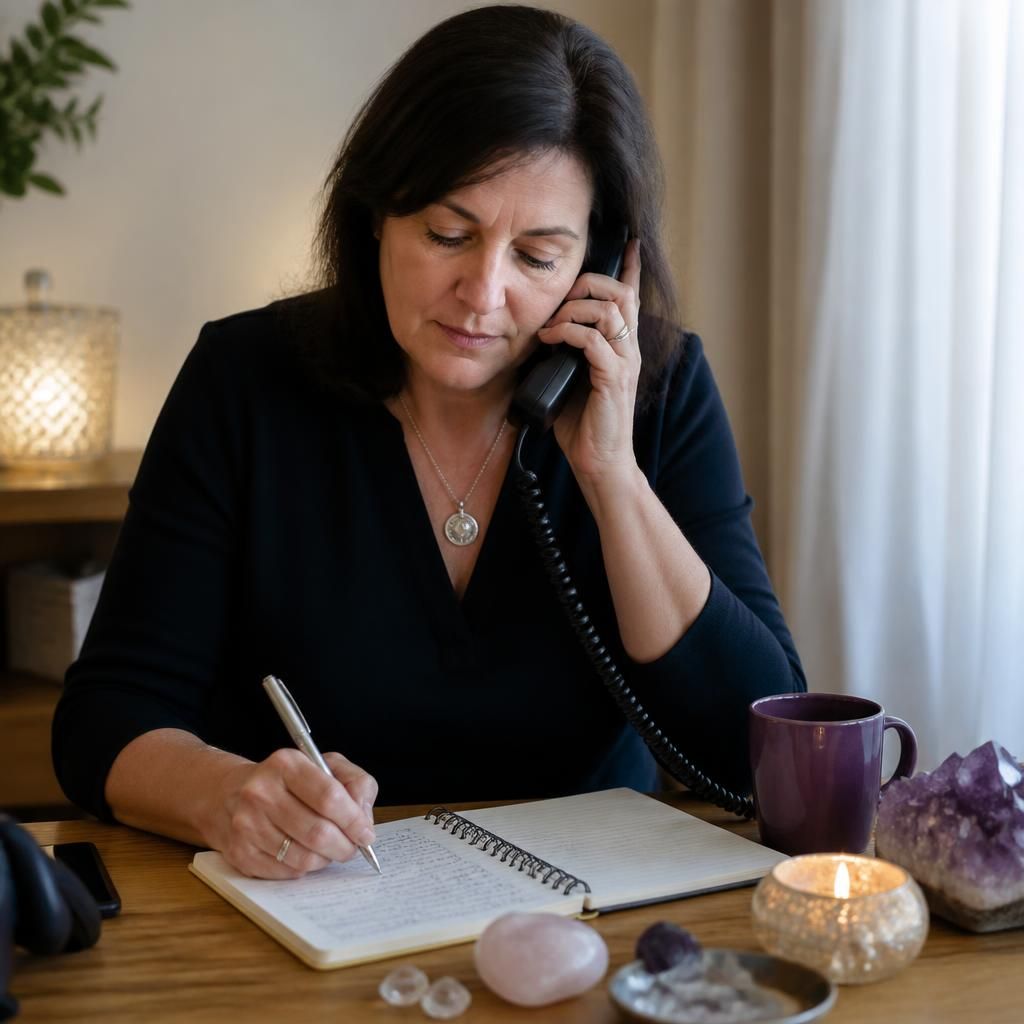
Some psychic mediums use structured note-taking during a phone reading to organise impressions as they arise. They may record specific words, names, dates, sensations or recurring themes, then review these notes alongside the caller’s questions rather than relying on memory alone.
This approach can help separate an initial impression from a later interpretation and reduce the risk of overlooking a detail. It does not make an impression factual or prove a spiritual source; the notes remain part of the practitioner’s interpretive process. If a medium uses this technique, they should explain what they are recording and allow the caller to clarify whether a detail has personal relevance.