


How does telephone clairvoyance maintain the privacy of a client?
Telephone clairvoyance supports client privacy by allowing the reading to take place remotely, without the visual exposure or physical presence of an in-person appointment. Clients can choose a private setting, share only the details relevant to their questions and discuss personal matters through a confidential, personalised consultation.
Telephone clairvoyance maintains client privacy by limiting the reading to a direct voice consultation, reducing the need to disclose identifying information and giving the client control over what they choose to discuss. Privacy depends on both the reader’s handling of information and the client’s own telephone and communication settings, so confidentiality should be considered throughout the process.
A client generally only needs to share the information relevant to the reading. For example, a relationship question may be discussed without providing full names, addresses or detailed background information. Keeping disclosures proportionate helps establish clear boundaries and reduces the amount of personal data connected with the consultation.
Confidentiality is also supported by a professional approach to conversation. A clairvoyant should listen without judgement, avoid unnecessary repetition of sensitive details and treat information about relationships, family circumstances, work or personal concerns as private. Clients can clarify at the beginning of a session what they do and do not wish to discuss, and can decline to answer questions that feel too personal.
Telephone readings do not automatically make every communication private. Before sharing sensitive information, it is sensible to check how the service handles consultation notes, contact details, payment information and any follow-up messages. Clients may ask whether details are recorded, who can access them, how long they are retained and how they can request that information is corrected or removed. These are practical questions rather than assumptions that a service has a particular data-handling policy.
The client’s surroundings and device settings are equally important. For a more discreet conversation, a client can:
- use a personal telephone and a private room;
- check that the call is not on speakerphone or connected to a shared device;
- consider whether call history, voicemail notifications or message previews could be seen by another person;
- avoid discussing highly sensitive details where other people may overhear; and
- confirm who will make contact if follow-up communication is needed.
Privacy does not mean that a telephone clairvoyant can guarantee absolute secrecy in every circumstance. Telephone networks, devices, payment systems and digital records each involve separate privacy considerations. Clients should therefore avoid sharing passwords, financial security details, government identification numbers or information that is not necessary for the reading.
For Elizabeth Rose Psychics, the relevant privacy principle is a focused, personalised consultation in which the client decides how much personal context to provide. Asking clear questions about information handling before the session, sharing only what is necessary and taking sensible precautions with the telephone helps keep the reading appropriately confidential.
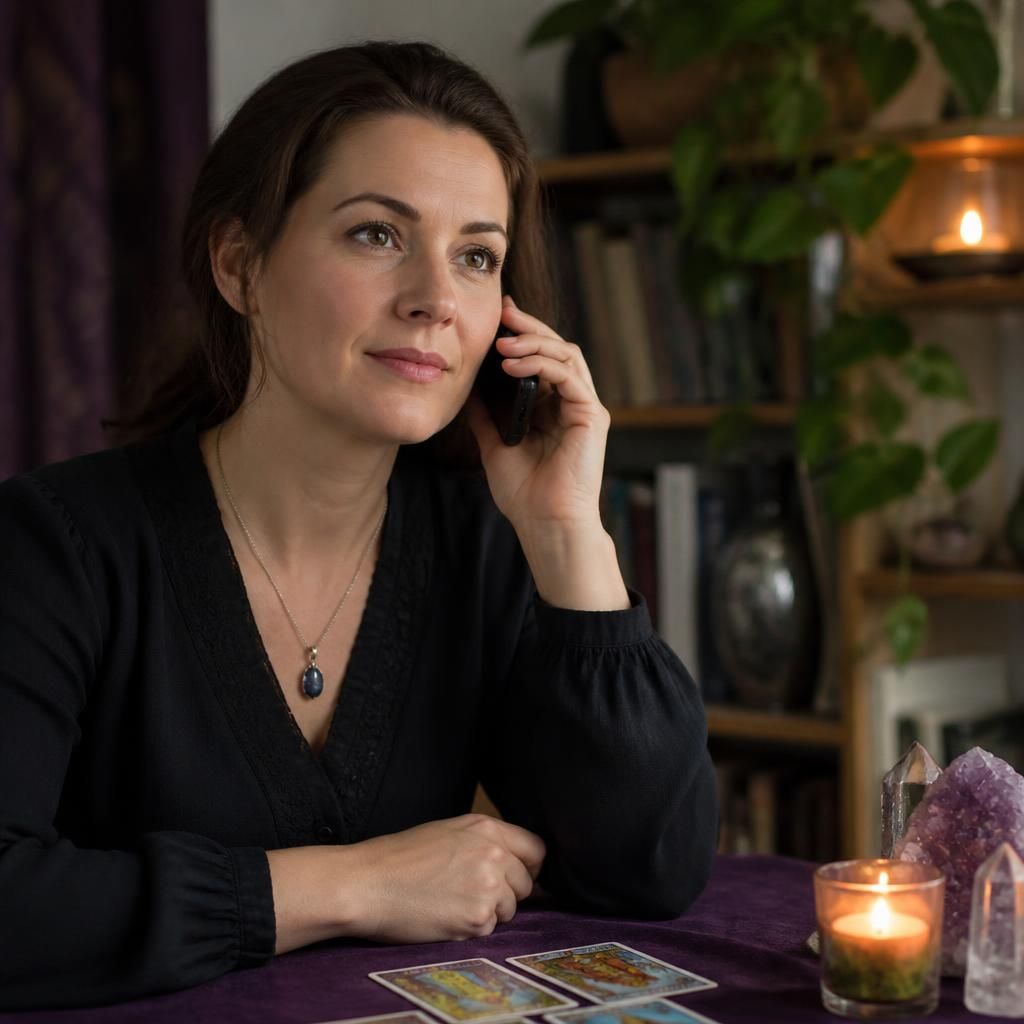
Telephone clairvoyance protects privacy most effectively when the consultation respects the boundaries of people who are not on the call. A client may ask about a partner, relative or colleague, but discussing that person does not authorise the disclosure of their confidential information.
A responsible clairvoyant should avoid requesting unnecessary identifying details about third parties and should not present private records, passwords or personal communications as evidence of a reading. Insights should be expressed as spiritual or interpretive guidance rather than as access to restricted information. This distinction helps keep the session focused on the client’s concerns without turning another person’s private life into part of the consultation.
Clients can also frame questions around their own choices and experiences—for example, asking how to approach a relationship decision rather than seeking undisclosed facts about someone else. That approach supports useful discussion while maintaining appropriate privacy boundaries for everyone involved.
Discuss Your Privacy Questions Before a Telephone Clairvoyance Reading
Before arranging a telephone clairvoyance reading with Elizabeth Rose Psychics, discuss your privacy questions and clarify how consultation information is handled. You can then decide whether the service’s approach suits your personal boundaries.