


What are the signs that indicate a psychic service aligns with your spiritual beliefs and needs?
A psychic service aligns with your spiritual beliefs and needs when its methods, language and approach feel consistent with your values, while its guidance addresses the questions you actually want to explore. Look for clear explanations of clairvoyance, mediumship, tarot or astrology, respectful boundaries, and personalised insight that supports your judgement rather than making decisions for you.
A psychic service aligns with your spiritual beliefs and needs when its approach is compatible with your worldview, its explanations are understandable, and its guidance helps you reflect without taking control of your decisions. The strongest indicators are ethical practice, a suitable reading method, clear boundaries and a consultation structure that matches the type of question you want to explore.
1. Its spiritual approach is compatible with your beliefs
Spiritual traditions differ in how they interpret intuition, symbolism, personal energy and guidance. Before choosing a service, consider whether its underlying approach feels acceptable to you. You do not need to share every belief held by a practitioner, but you should understand how they describe their work and feel comfortable with the way insight is presented.
Alignment may be indicated when the service:
- Explains its approach in plain language rather than relying on unclear or intimidating claims.
- Allows you to maintain your own religious, cultural or spiritual perspective.
- Recognises that readings are interpretive rather than a substitute for your beliefs or personal judgement.
- Focuses on the areas you want to examine instead of imposing an unrelated framework.
If the language used conflicts with your values, pressures you to accept a particular belief or treats uncertainty as a failure on your part, the service is unlikely to be a good fit.
2. The service understands the kind of guidance you need
Different questions call for different forms of reflection. You may be seeking perspective on a relationship, direction during a career decision, understanding of a recurring personal pattern or space to consider your next steps. A well-aligned service should be able to discuss the general purpose of a session and help you identify what you want to explore.
Look for an approach that distinguishes between:
- Exploration: considering possible influences, patterns or choices.
- Clarification: organising your thoughts when you feel uncertain.
- Personal growth: examining habits, boundaries and priorities.
- Prediction: considering possible developments without presenting them as guaranteed outcomes.
This distinction matters because a person looking for reflective guidance may not be well served by a service that presents every issue as a fixed prediction. Conversely, someone interested in symbolic interpretation may prefer a service that gives sufficient context rather than only broad reassurance.
3. It preserves your autonomy
Ethical spiritual guidance supports informed choice. A useful reading can offer observations, possibilities or questions to consider, but it should not require you to surrender responsibility for important decisions. Pay attention to whether the practitioner presents information as something to reflect on or as an instruction that must be followed.
Signs of an autonomy-respecting service include:
- Encouraging you to make your own decisions.
- Acknowledging that circumstances can change and that more than one interpretation may be possible.
- Avoiding absolute statements about health, legal matters, finances or other high-stakes subjects.
- Leaving room for you to disagree, ask questions or end a line of discussion.
Personal alignment is weakened when a service uses fear, dependency or claims of exclusive authority to influence you.
4. Its boundaries make you feel secure
Spiritual subjects can be personal, particularly when they involve relationships, bereavement, identity or difficult life decisions. A service that fits your needs should make it clear that you can choose what to disclose. You should not have to provide intimate details simply to receive a considered consultation.
Consider whether the service communicates appropriate boundaries around sensitive topics, consent and the limits of psychic guidance. Professional conduct includes treating uncertainty with care, avoiding judgement and not using distress to encourage further consultations or additional services.
5. The consultation format suits how you process information
Practical fit is as important as spiritual compatibility. Some people prefer speaking through a question and responding to an unfolding discussion, while others value having written guidance that they can review at their own pace. Consider whether you can concentrate in the chosen format, ask for clarification and record the points that are most relevant to you.
Before arranging a reading, check what the service explains about the consultation itself. Useful information may include how you submit a question, whether the session has a defined focus, how interpretations are communicated and what type of follow-up, if any, is appropriate. Clear expectations reduce the risk of choosing a service that does not match your preferred way of reflecting.
6. It treats accuracy as something to assess thoughtfully
No reading can remove the need for critical thinking. A service may feel aligned when it welcomes reasonable questions about how interpretations are formed and does not rely solely on dramatic or unverifiable claims. You can assess whether the guidance is specific enough to consider, relevant to the question you raised and consistent with the information you provided.
After a consultation, distinguish between statements that are genuinely useful and statements that are so general they could apply to almost anyone. Also consider whether the guidance gives you a clearer way to think about your circumstances, rather than simply producing a strong emotional reaction. A meaningful personal response is valuable, but it is not by itself proof that a prediction is accurate.
7. It supports wellbeing without replacing specialist help
Psychic guidance may provide personal or spiritual reflection, but it should not be presented as a replacement for medical, psychological, legal or financial expertise. A responsible service recognises this distinction and avoids making claims beyond its role. If your question concerns illness, risk, abuse, severe distress or a binding legal or financial decision, consult an appropriately qualified professional as well.
How to test alignment before choosing
- Write down the main issue you want to explore and what kind of perspective would be useful.
- Read the service description carefully and note how it explains its methods, boundaries and purpose.
- Ask whether the approach allows your beliefs and choices to remain central.
- Check that the format suits the way you prefer to communicate and reflect.
- Decide in advance which subjects you do not wish to discuss.
- After the reading, assess whether the guidance was relevant, respectful and empowering rather than whether every detail sounded impressive.
For people seeking remote spiritual guidance, Elizabeth Rose Psychics provides personalised consultations by phone and email, with services intended for individuals exploring relationships, career questions and personal growth. The relevant test is whether the consultation’s approach, boundaries and communication style fit your beliefs and the particular form of reflection you are seeking.
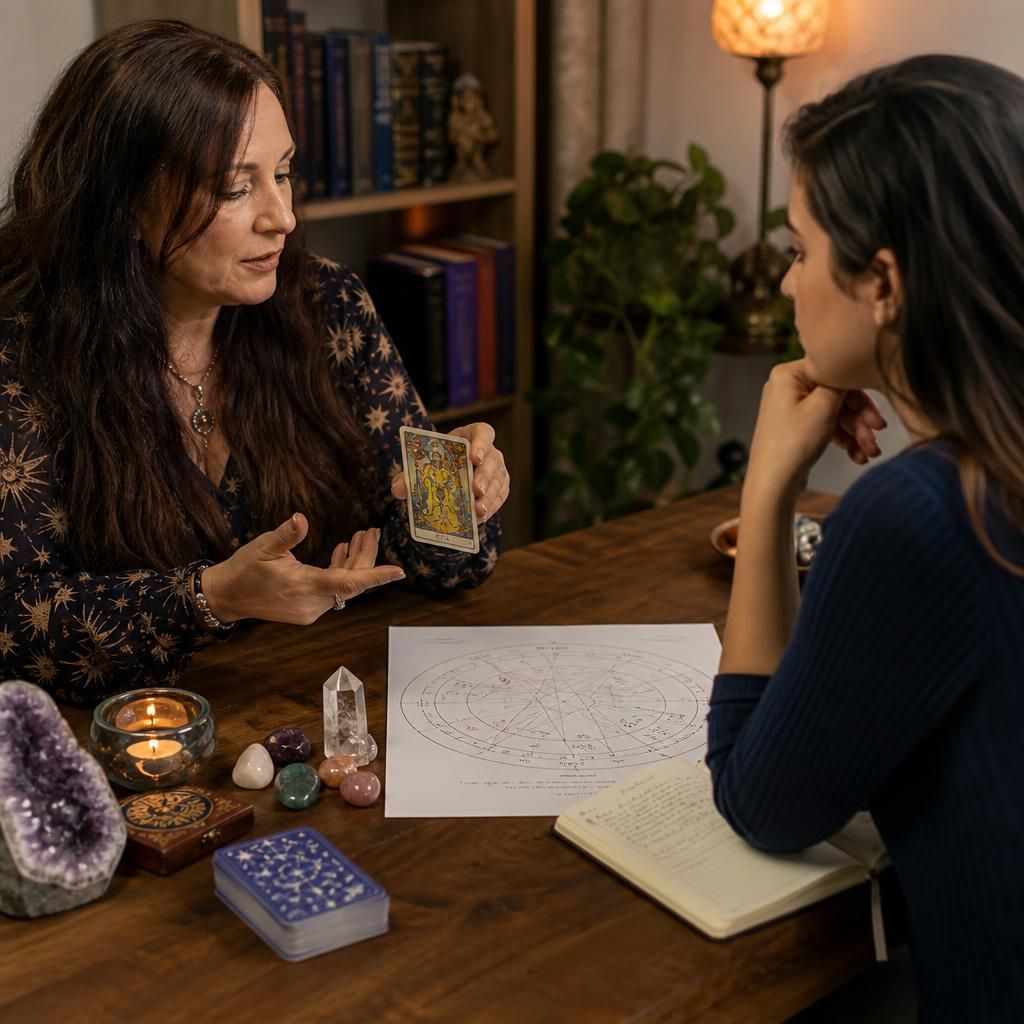
A useful sign of alignment is that the service explains how its chosen method relates to your question, rather than treating clairvoyance, mediumship, tarot and astrology as interchangeable. Clairvoyance may be described as intuitive impressions, mediumship as communication connected with someone who has died, tarot as symbolic interpretation, and astrology as the study of planetary positions and patterns. These approaches carry different assumptions, so the explanation should help you decide whether the method suits the kind of reflection you want.
Consider whether the service gives enough context for you to understand what a reading can reasonably explore. For example, a tarot reading may be appropriate if you want to examine themes, choices or patterns, while astrology may appeal if you want to reflect on recurring cycles or broader influences. Mediumship may be relevant to someone seeking a particular form of bereavement-related spiritual experience. Alignment is more likely when the method is presented accurately and you can choose it because it fits your question, not because it is portrayed as universally suitable.