


How can Vedic astrology chart interpretations enhance a clairvoyant reading?
Vedic astrology chart interpretations can provide a structured context for a clairvoyant reading by highlighting themes such as relationships, career and personal growth. Used alongside clairvoyant impressions, the chart may help focus the discussion and relate intuitive insights to planetary placements and life patterns, without replacing the clairvoyant’s interpretation.
Vedic astrology chart interpretation can enhance a clairvoyant reading by adding a systematic astrological framework to intuitive impressions. Rather than treating the chart as proof that a clairvoyant perception is correct, it can be used to refine the subject, identify relevant life periods and distinguish enduring tendencies from temporary influences.
Vedic astrology, or Jyotisha, generally uses a sidereal zodiac, which calculates planetary positions in relation to the stars. This differs from the tropical zodiac commonly used in Western astrology, so the signs and house placements in a Vedic chart may not match those in another astrological system. A useful reading should make clear which system is being applied and should use accurate birth details, particularly the date, location and recorded time of birth.
The chart gives the clairvoyant and client several technical reference points:
- The ascendant: This is the sign rising at birth and is used to assess the chart’s house structure, personal approach and broad direction.
- The houses: These represent areas such as communication, family, partnerships, work, finances, responsibilities and long-term development. Their condition can help define which part of life an intuitive message may concern.
- The Moon: In Vedic astrology, the Moon is closely associated with the mind, emotional responses and perceptive patterns. Its sign, house and nakshatra may provide useful context when a reading involves feelings or decision-making.
- Nakshatras: These are 27 lunar divisions used to add detail to the Moon’s position and to other planetary placements. They can offer a more specific symbolic language than sign-based interpretation alone.
- Planetary periods: Dashas, particularly the Vimshottari dasha system, are used to examine chapters of life associated with particular planets. They can help frame whether a concern relates to a longer developmental phase or a more immediate transition.
- Transits: Current planetary movements can be compared with the birth chart to examine developing pressures, opportunities or points requiring attention. They should be interpreted in relation to the whole chart rather than in isolation.
During an integrated session, the clairvoyant may first describe impressions without relying on the chart. The Vedic interpretation can then be used as a second layer of enquiry. For example, an impression involving a change in responsibility could be explored against the relevant houses, the current planetary period and significant transits. If the chart points towards a different life area, that discrepancy is not necessarily a failure; it may indicate that the message needs clarification or that the symbolism has been interpreted too narrowly.
This comparison is most useful when it produces precise, open questions. Instead of asking whether a particular event is guaranteed, a client might ask:
- Which chart factors appear relevant to the concern I have raised?
- Does the current dasha describe a period of consolidation, learning or redirection?
- What distinction does the chart make between an established pattern and a temporary influence?
- How does the clairvoyant impression relate to the ascendant, Moon or relevant house?
- What practical choices remain available, regardless of the astrological indication?
Vedic chart interpretation also adds a timing dimension, but timing should be expressed carefully. Dashas and transits may suggest periods for reflection, effort or change; they do not establish that a specific event must occur on a particular date. Birth-time inaccuracies can alter the ascendant, house cusps and some timing calculations, so an astrologer may need to qualify conclusions when the recorded time is uncertain.
The two approaches also have different evidential bases. A clairvoyant reading relies on the practitioner’s claimed intuitive perception, whereas Vedic astrology follows a symbolic system based on calculated chart positions and traditional interpretive rules. Combining them does not make either method scientifically verified, and neither should replace professional medical, legal, financial or mental-health advice. The most responsible use is reflective: the chart supplies questions and context, while the clairvoyant conversation explores personal meaning and possible choices.
For a phone or email consultation, providing complete birth information and a concise description of the issue can make the discussion more focused. It is sensible to separate confirmed facts from hopes or fears, note which points are specific rather than broadly worded, and retain personal judgement when evaluating the interpretation. A well-conducted session should explain how the chart was read, identify uncertainty where it exists and leave room for the client to make informed decisions rather than presenting astrological or clairvoyant impressions as fixed outcomes.
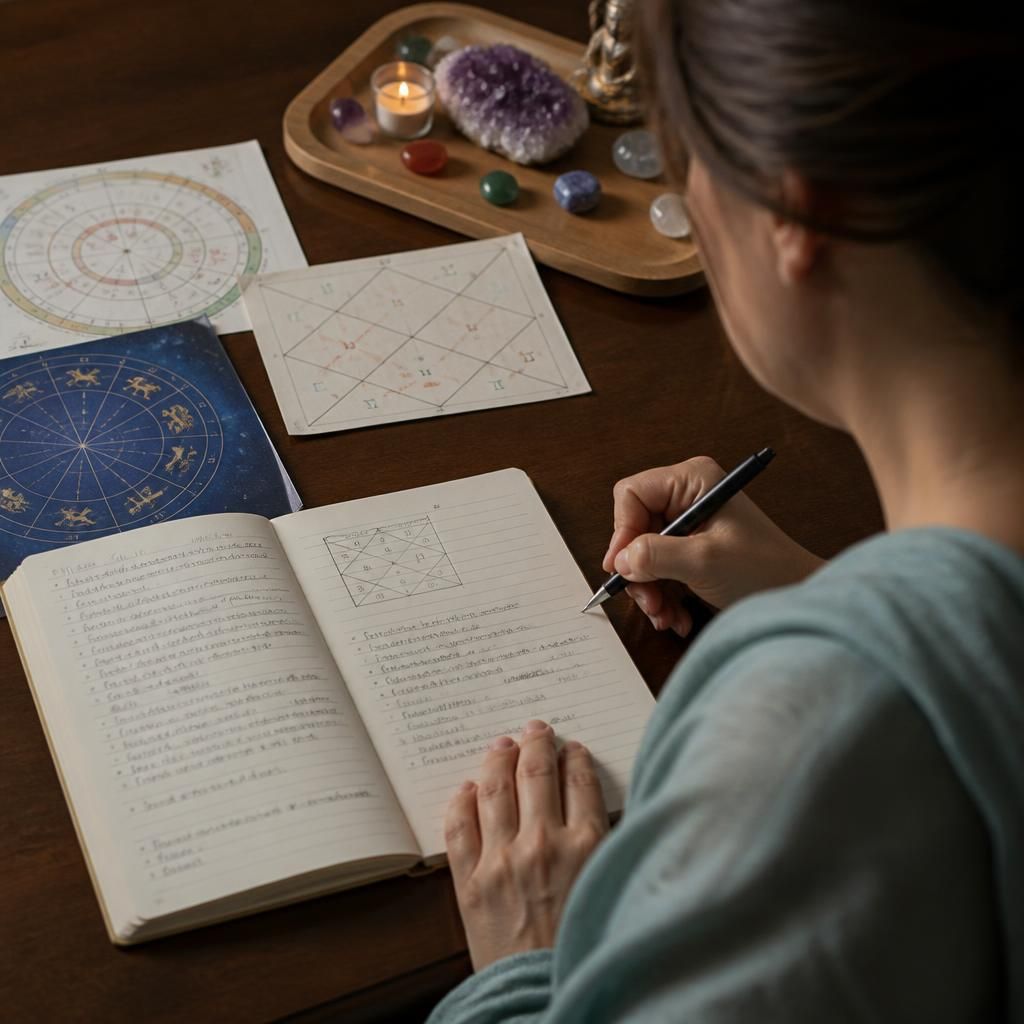
A written comparison can make a combined Vedic astrology and clairvoyant reading easier to evaluate. Record the chart factors discussed, the intuitive impressions offered, and the questions raised during the session as separate notes. This preserves the distinction between an astrological interpretation and a clairvoyant perception, rather than blending them into one conclusion.
Keeping the original notes also allows you to review whether later reflections relate to the themes discussed, without rewriting the reading to fit events after the fact. This approach does not prove that either method predicted an outcome, but it can reveal which parts were specific, which remained open to interpretation and which questions still require practical consideration.