




What role does my Vedic astrology chart play in enhancing the clairvoyant reading experience?
A Vedic astrology chart can give a clairvoyant reading additional context by mapping planetary placements, life themes and timing patterns from your birth details. Used alongside clairvoyant impressions, it may help focus discussion on areas such as relationships, purpose and significant decisions, while the two methods remain distinct.
A Vedic astrology chart enhances a clairvoyant reading by providing a structured framework for interpreting intuitive impressions. Rather than replacing clairvoyance, it can help organise the reading around established astrological factors, clarify which themes deserve attention and give the discussion a more defined point of reference.
Vedic astrology, or Jyotisha, uses the sidereal zodiac and examines features such as the ascendant, planetary positions, houses, nakshatras and planetary periods. Each element contributes a different type of information. The ascendant and its ruling planet can indicate how a person approaches life, while the houses relate to areas such as communication, family, vocation, finances and partnerships. Nakshatras add a finer layer of interpretation by placing planets within specific lunar divisions.
In a combined session, these details can help a clairvoyant distinguish between a broad impression and a more focused line of enquiry. For example, an intuitive sense of professional change could be explored alongside the tenth house, its ruling planet or relevant planetary influences. This does not prove that a particular event will occur; it gives the reader an additional interpretative reference when asking what the impression may relate to.
The chart can also improve the precision of follow-up questions. Instead of discussing a concern in general terms, you might ask whether an impression relates to a partnership pattern, a family responsibility, a change in professional direction or a personal belief that is affecting your choices. Specific questions help separate the subject you want to understand from assumptions you may already hold about it.
- It provides a second interpretative framework: clairvoyant impressions are intuitive, whereas the chart is analysed through a defined astrological system. Comparing the two can show where they support the same topic and where they offer different perspectives.
- It adds personal detail: a Vedic chart is calculated from an individual’s birth information, so the discussion can be more tailored than a general sign-based reading.
- It helps identify recurring patterns: repeated emphasis on particular houses, planets or nakshatras may suggest useful subjects for reflection during the clairvoyant conversation.
- It supports clearer prioritisation: when several concerns arise, the chart can help establish which areas to examine first, rather than moving between unrelated questions.
Accuracy matters when preparing a chart. The birth date and place should be recorded correctly, and the birth time should be as reliable as possible. In Vedic astrology, a small difference in recorded time can affect the ascendant, house positions and some calculations. If the time is uncertain, that limitation should be stated openly rather than treating every chart detail as exact.
It is also important to understand the different roles of the two methods. Astrology interprets symbolic placements and cycles according to a traditional system. Clairvoyance involves impressions received through intuitive perception. If an impression does not correspond neatly with the chart, that does not automatically make either source invalid. The discrepancy may simply indicate that the methods are addressing different aspects of the same concern, or that the information requires further questioning.
A useful reading therefore treats the chart as a guide for exploration, not as a fixed verdict. Planetary combinations may be interpreted as tendencies, pressures or opportunities for self-awareness, but they do not remove personal agency. Decisions about relationships, work, health or finances should also take account of direct evidence, qualified professional advice and the circumstances of the individual involved.
To make the combined approach more productive, prepare a short list of the matters you want to examine and identify which information you are comfortable sharing. Ask the practitioner to explain which part of the interpretation comes from the chart and which part comes from clairvoyant perception. You can then assess the reasoning behind each point instead of treating the reading as one undifferentiated prediction.
The most useful outcome is usually greater clarity about the questions being considered. A Vedic astrology chart can give intuitive material a coherent structure, while clairvoyant insight may draw attention to personal details that a purely technical chart reading does not address. Used with appropriate boundaries, the two approaches can complement one another without being confused as the same practice.
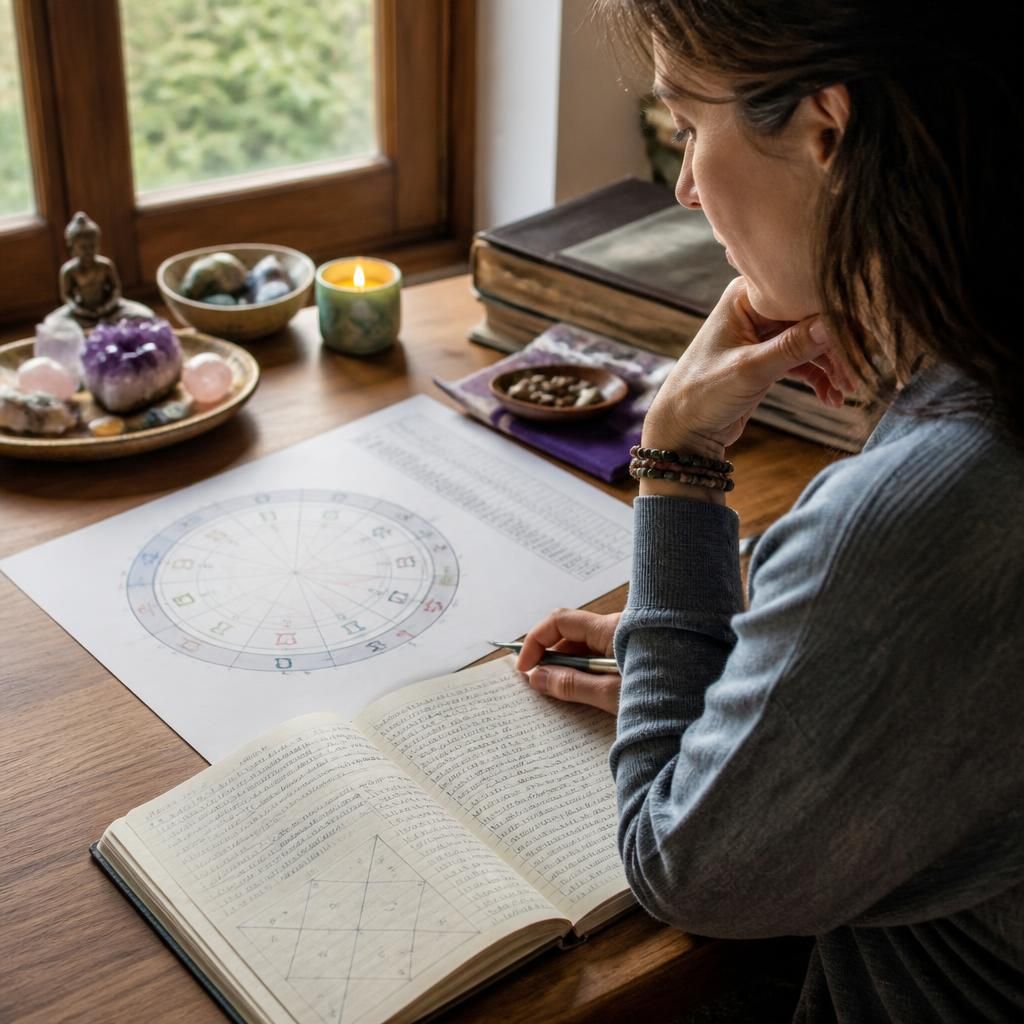
A Vedic astrology chart can add a sense of timing to a clairvoyant reading through planetary periods, known as dashas, and current transits. Dashas are used to identify broader life phases associated with particular planetary influences, while transits show how present planetary movements relate to the natal chart. This may help place a clairvoyant impression within a wider period of development rather than treating it as an isolated event.
Timing should be treated as interpretative rather than exact. A chart may suggest when a subject warrants closer attention, but it cannot establish a guaranteed date or outcome. The clairvoyant element can then explore how that period is being experienced personally, adding context that a calculation alone cannot provide.