




What are the different remote technologies used in online clairvoyant readings, and how do these platforms ensure secure and seamless communication?
Online clairvoyant readings can be delivered through telephone consultations and email exchanges: phone supports live verbal discussion, while email provides a written format for questions and responses. Secure, seamless communication relies on private contact details, reputable encrypted services, secure account access and clear privacy practices, which clients should check before sharing sensitive information.
Remote clairvoyant readings generally use two communication technologies: telephone networks for live conversation and email systems for written exchanges. Each creates a different communication environment. Telephone supports immediate questions, clarification and conversational interaction, whereas email creates a documented exchange that can be reviewed before and after a reading. Security and continuity depend on how the provider manages the chosen channel, the accounts used to access it and the information shared through it.
Telephone technology
Phone readings may be carried over a traditional fixed-line network, a mobile network or an internet-based voice service. These systems transmit speech differently, but the practical requirements are similar: the correct number must be used, both parties need a sufficiently stable connection, and the caller should be able to speak without unnecessary interruptions. A provider may use a business telephone system to route calls, identify the intended reader and separate client contact details from personal numbers.
Telephone communication is immediate, but it is not automatically private simply because it takes place by voice. Conventional telephone and mobile calls have security characteristics that differ from encrypted internet applications, and call records or voicemail may remain with the telecommunications provider. Clients should therefore check whether calls are recorded, how recordings are stored, who can access them and how long they are retained. If recording is used, the provider should explain its purpose and obtain any consent required by applicable privacy rules.
Email technology
Email readings use mail servers to send, receive and store messages. The process normally involves an email address, a mailbox and one or more servers that handle delivery between sender and recipient. This makes email suitable for considered questions and written responses, but it also means that messages may exist in several places, including the sender’s sent folder, the recipient’s inbox, backups and server logs.
Secure email handling involves more than choosing a professional-looking address. Transport encryption helps protect messages while they move between compatible mail servers, while encryption at rest can protect stored messages on a server or device. These safeguards do not remove every risk: an account with a weak password, an unlocked phone or a forwarded message may still expose private information. Clients should use a personal account with a strong, unique password and should avoid sharing access with other people.
Account and access controls
Where a provider uses an online booking, contact or client-management system alongside phone or email, account controls help restrict information to authorised users. Useful measures include:
- strong passwords and multi-factor authentication for staff accounts;
- role-based access, so each user can see only the information needed for their work;
- automatic session time-outs and device protection;
- software updates and malware protection on computers and mobile devices;
- audit logs that help identify unusual access or changes to records; and
- clear procedures for removing access when a staff member no longer needs it.
These controls reduce the likelihood of accidental disclosure, but they are not an absolute guarantee of confidentiality. A responsible provider should also have a privacy notice explaining what personal information is collected, why it is used, whether it is shared with technology suppliers and how clients can request correction or deletion where applicable.
How seamless communication is maintained
A seamless reading depends on operational details as well as network technology. For telephone consultations, accurate contact information, a confirmed appointment record and a clear process for dealing with a disconnected call reduce avoidable disruption. Headphones can improve speech clarity and limit surrounding noise. For email, consistent subject lines, readable formatting and clear identification of the sender help prevent messages being overlooked or mistaken for unwanted mail.
Providers should also keep the two sides of a conversation aligned. A phone reading may require the reader to confirm the client’s name or agreed appointment details without requesting unnecessary sensitive information. An email exchange should preserve the relevant thread, identify any attachments clearly and avoid placing confidential material in an unnecessarily broad distribution list. These simple practices support continuity without requiring the client to repeat information or send it through several unrelated services.
Practical checks before sharing information
- Confirm the official telephone number or email address through the provider’s own website or established correspondence.
- Check the privacy notice and look for information about recording, storage, third-party platforms and retention.
- Ask whether a phone call is recorded and whether email correspondence is retained.
- Use a private device, an updated operating system and a secure connection; avoid sending sensitive information over an open public network.
- Share only the details needed for the reading. A clairvoyant reading does not normally require passwords, full payment-card details or access to personal accounts.
- Be cautious of unexpected requests to move a conversation to a different address, download an unknown file or disclose authentication codes.
For Elizabeth Rose Psychics, the relevant remote formats are phone and email readings, so clients can choose between live verbal communication and a written exchange. The safest approach is to understand the privacy limits of the selected channel, use the provider’s legitimate contact details and confirm how personal information is handled before sending it. Secure technologies can support private, uninterrupted communication, but good account security and careful information sharing remain essential on both sides.
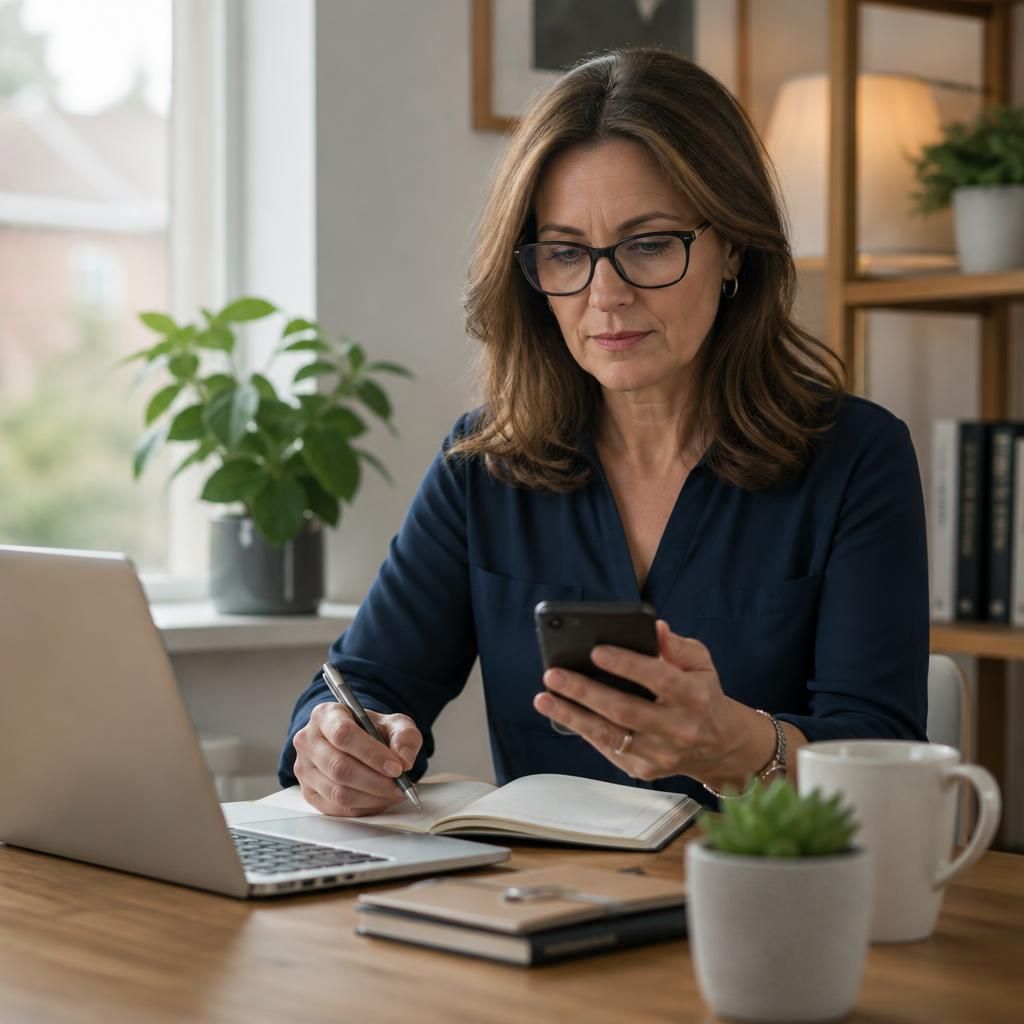
A secure remote reading service should limit how much information passes between its booking, contact and consultation systems. Ideally, the booking process transfers only the details needed to arrange the session, rather than exposing a complete client record to every platform involved. This principle, known as data minimisation, reduces the impact of an error or unauthorised access.
Clients can ask which systems handle their details and whether external technology providers process or store the information. Clear separation between scheduling data and reading correspondence also supports continuity: the reader can access the appointment context without requiring sensitive personal information to be copied across multiple channels.