





What qualifications should a love psychic have?
A qualified love psychic should demonstrate relevant training or substantial experience in their chosen practice, such as tarot, astrology, clairvoyance or mediumship, alongside clear ethical standards. They should explain their approach honestly, respect your autonomy and beliefs, protect your privacy, and avoid presenting spiritual guidance as guaranteed fact or professional medical, legal or financial advice.
A trusted love psychic should have demonstrable competence in the method they use, strong communication skills and a clearly defined professional practice. There is no single universally recognised qualification that makes someone a love psychic, so assess the evidence behind their work rather than relying on a title, certificate or confident presentation alone.
Useful qualifications and indicators may include:
- Relevant study: Look for structured learning in the stated discipline, whether that involves tarot, astrology, clairvoyance or mediumship. A credible reader should be able to describe what they have studied and how that informs their approach.
- Practical experience: Experience should involve giving readings to a range of clients and handling relationship questions with care. It is reasonable to ask how the reader approaches situations such as uncertainty, separation, reconciliation or conflicting emotions.
- Method-specific understanding: A tarot reader should understand card meanings, spreads and the limits of interpretation. An astrologer should be able to explain the chart factors being considered. A clairvoyant or medium should distinguish intuitive impressions from information provided by the client. This helps you identify a practitioner who uses a method thoughtfully rather than relying on general statements.
- Communication ability: Love readings often involve sensitive or ambiguous questions. The reader should listen carefully, check that they have understood the issue and explain interpretations in language you can follow. They should also make clear when a statement is symbolic, interpretative or uncertain.
- Informed consent: Before the reading, the practitioner should explain what the session involves, what information they need and what they can reasonably address. You should not be pressured to disclose details, accept an interpretation or continue with a reading that no longer feels suitable.
- Professional boundaries: A suitable reader keeps the discussion focused on guidance rather than dependency. Be cautious of anyone who encourages repeated bookings as the only way to protect a relationship, claims exclusive access to the truth or uses fear to influence your decisions.
- Appropriate referrals: A psychic is not a substitute for a doctor, solicitor, financial adviser or qualified relationship counsellor. A responsible practitioner should recognise when a concern belongs with another professional, particularly where there may be risk, abuse, serious distress or a health issue.
- Clear service information: Before booking, you should be able to understand the reading format, the selected method, the questions it is designed to address and any relevant terms. For a remote consultation, this also includes knowing whether the reading is conducted by phone or email and how information is exchanged.
Claims of membership, certification or formal training should be treated as supporting information, not automatic proof of quality. Check what the credential actually represents, who issued it and whether it relates to the method being offered. A short course may show interest or basic study, but it does not necessarily demonstrate extensive professional competence.
Reviews can provide context, but they are not a qualification and should not be the sole basis for choosing a reader. Give more weight to specific, balanced descriptions of the consultation than to claims of guaranteed predictions or dramatic results. You can also assess the reader’s public explanations: qualified practitioners generally describe their process consistently and avoid presenting every interpretation as certain.
Before arranging a love reading, prepare a few practical questions for the practitioner. Ask which method they use, what experience they have with relationship-focused readings, how they handle uncertain or emotionally difficult subjects, and what the session can and cannot provide. Their response can reveal as much about their professionalism as any certificate.
For a phone or email reading, clarity is particularly important because the practitioner cannot rely on the same face-to-face setting. Consider whether the reader explains how questions are submitted, how an interpretation is communicated and how you can clarify a point without being pushed towards a particular conclusion. Elizabeth Rose Psychics provides professional readings by phone and email for people across the USA, so these practical details can help you judge whether the format suits your needs.
In short, the strongest qualification profile combines method-specific learning, relevant experience, careful communication, informed consent, professional boundaries and a realistic explanation of what a reading can offer. Those factors provide a more reliable basis for choosing a love psychic than an impressive label alone.
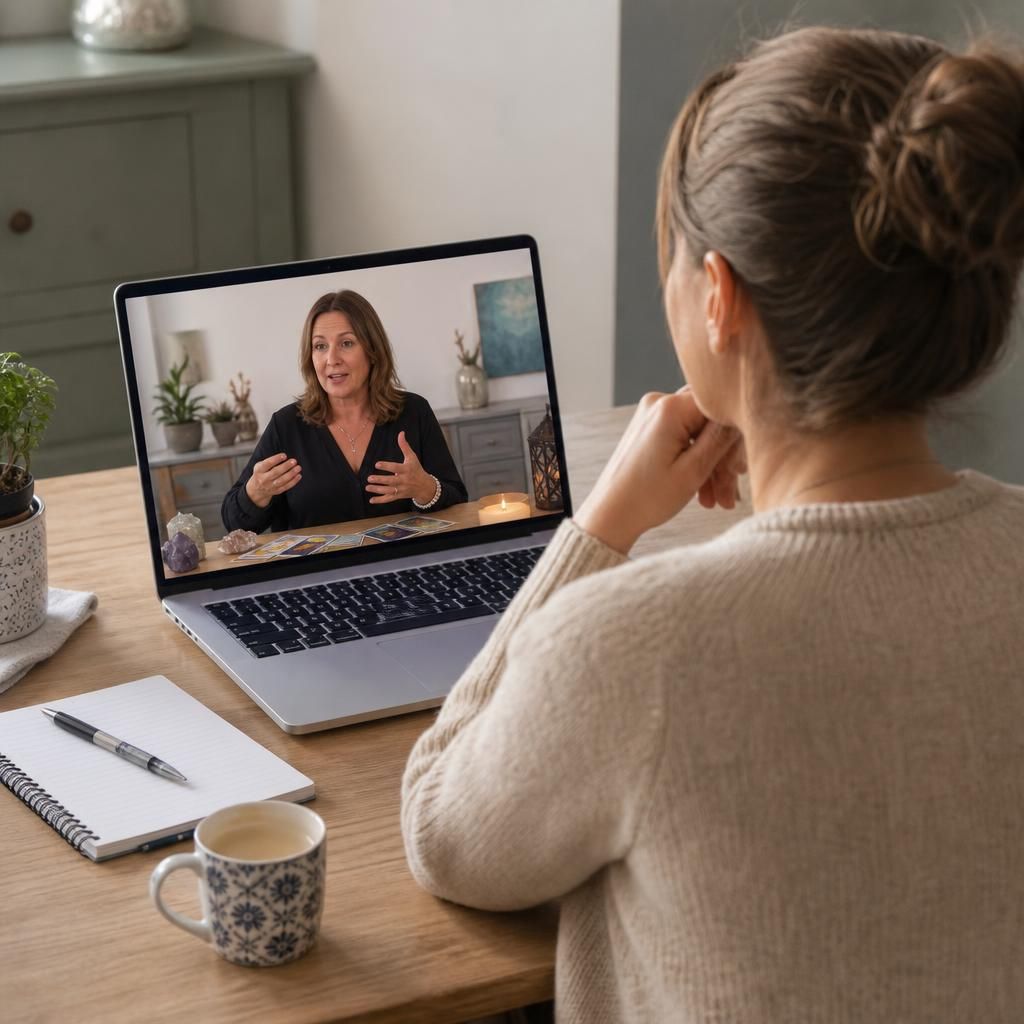
Professional accountability is an important qualification indicator because it shows how a love psychic operates when a client is dissatisfied or an interpretation is unclear. Before booking, look for a clearly identified practitioner or service, written terms for the reading, a straightforward complaints process and an explanation of how personal information is handled.
A responsible reader should be willing to clarify what was meant, acknowledge uncertainty and address concerns without becoming defensive or placing blame on the client. These safeguards do not prove psychic ability, but they help distinguish an organised, accountable practice from one that relies solely on persuasive claims or personal authority.