


What are psychic visions and how do they differ from tarot readings?
Psychic visions are intuitive impressions—such as images, symbols or scenes—that a psychic perceives without using a physical tool. Tarot readings use a drawn spread of cards, with their established imagery and positions providing a structured framework for interpreting possible influences, patterns and choices.
Psychic visions and tarot readings differ mainly in how information is received and interpreted. A psychic vision relies on the reader’s intuitive perception, while a tarot reading uses the meanings, relationships and positions of selected cards to examine a situation. Neither method should be treated as a guaranteed prediction: both are better understood as ways of exploring possibilities, influences, feelings and decisions.
How psychic visions are interpreted
Psychic visions may appear as mental pictures, colours, symbolic objects, places or brief scenes. The impression may relate to the person asking the question, another individual, a past event or a possible future development. A competent reader normally explores the image in context rather than assuming that every detail is literal. For example, a vision of a road might represent travel, a change of direction or a choice, depending on the surrounding information and the question being asked.
Visions can also be accompanied by other intuitive impressions, such as a feeling, phrase or physical sensation. In a mediumship reading, the reader may interpret impressions as relating to someone who has died; in a clairvoyant reading, they may concern circumstances, people or patterns in the client’s life. These are distinct applications of intuitive work, so it is sensible to ask the reader what type of insight they offer before beginning.
How tarot adds structure
Tarot gives the reading a visible framework. The reader selects cards, lays them in particular positions and considers both individual meanings and the way the cards interact. A position might represent the background to a situation, a current influence, an obstacle, an available option or a likely direction if circumstances remain similar.
The structure can make it easier to divide a broad concern into specific parts. A question about changing career, for instance, might be examined through motivation, practical obstacles, useful resources and the consequences of different choices. The cards do not remove the need for judgement; they provide prompts for a discussion about patterns and possible responses.
Key differences between the two approaches
- Source of information: psychic visions come through the reader’s reported intuitive impressions, whereas tarot interpretations begin with a selected deck and its symbolism.
- Degree of structure: a vision may develop spontaneously and follow an individual line of perception; a tarot spread usually establishes a defined sequence of questions or positions.
- Client involvement: tarot allows the client to see the cards and discuss particular symbols. With a vision, the client generally receives the reader’s description and helps clarify relevant people, events or feelings.
- Style of enquiry: visions may be used for an open-ended overview or impressions about a person or situation. Tarot can be particularly useful when the question involves alternatives, contributing factors or a process of decision-making.
- Interpretive language: visions are often personal and symbolic, while tarot draws on a recognised system of card imagery, suits, numbers and positions. This does not make tarot mechanical, as the reader still has to relate those elements to the question.
Where the methods overlap
Both approaches depend on interpretation rather than producing independently verifiable forecasts. A reader may identify a theme such as uncertainty, a changing relationship or a need to reconsider priorities, but the meaning should be tested against the client’s circumstances. The same symbol can have different implications for different people, and a reading should leave room for context rather than presenting one fixed explanation.
Some practitioners combine the methods. They may begin with a tarot spread and then describe intuitive impressions prompted by particular cards, or use a vision to guide which aspect of a situation deserves closer attention. When methods are combined, the reader should make clear which observations come from the cards and which are personal impressions. That transparency helps the client assess the reading thoughtfully.
Which is more suitable?
A psychic vision may suit someone seeking a broad intuitive perspective, especially when the concern is difficult to express as a precise question. Tarot may suit someone who wants a defined layout for examining a choice, relationship dynamic, career issue or personal-development goal. A person who prefers tangible prompts and an opportunity to discuss individual symbols may also find tarot easier to follow.
The choice should not be based on the assumption that one method is automatically more accurate. Useful considerations include the nature of the question, the reader’s experience with the chosen method, how much explanation is provided and whether the session encourages independent decision-making. It is also reasonable to ask whether the reading is intended for reflection, spiritual exploration, mediumship or guidance about a particular issue.
How to assess the information received
Use a reading as one source of perspective rather than as a substitute for evidence or professional advice. This is especially important for medical, legal, financial and safety-related matters. Avoid making an irreversible decision solely because a vision or card interpretation sounds definite. Instead, note the themes raised, compare them with observable circumstances and decide what practical steps are appropriate.
A well-conducted reading should distinguish possibility from certainty and avoid pressure, fear-based claims or demands for repeated sessions. Whether the method is psychic vision, tarot or a combination of both, the most useful outcome is a clearer understanding of the question and the choices available to you.
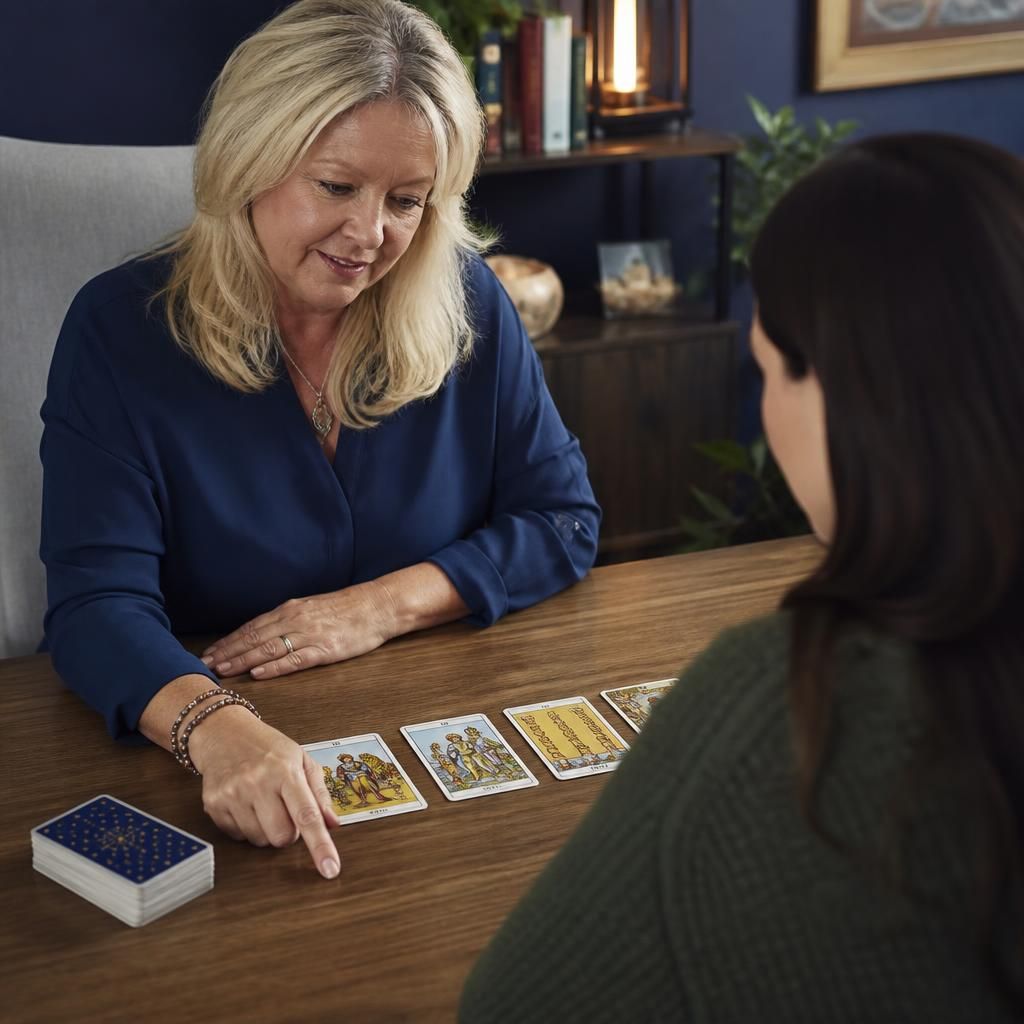
One practical distinction between psychic visions and tarot readings is how their material can be revisited after the consultation. A vision is usually conveyed through spoken descriptions of impressions that arose during the reading, while a tarot reading leaves a record of the cards drawn and their positions.
- Psychic visions: the reader may need to clarify when an image appeared, what it seemed connected to and whether it felt symbolic or literal.
- Tarot readings: the card names, spread and positions can be noted, allowing the discussion to be reviewed alongside the original question.
This difference can affect how someone reflects on the reading afterwards. Vision-based information may depend more heavily on the reader’s explanation and the client’s contextual knowledge. Tarot provides identifiable reference points, although interpreting those cards still requires attention to the question and the wider spread rather than relying on isolated meanings.