






What should I expect in a tarot or psychic reading in terms of process and outcomes?
A tarot or psychic reading typically begins with your questions and a discussion of the area you want to explore, followed by intuitive guidance, card interpretation or both. The outcome is usually a set of perspectives and possible insights about relationships, career or personal growth, rather than a guaranteed prediction or fixed result.
A tarot or psychic reading is a structured conversation in which you identify an area to explore, receive intuitive or symbolic interpretation, and consider how the information relates to your circumstances. A tarot reading uses cards as the main interpretive tool, while a psychic reading may rely on clairvoyant impressions, mediumship or other intuitive perceptions. In either case, the outcome is best understood as guidance and reflection, not a guaranteed forecast.
Before the reading
You will usually be invited to state what you would like to understand. A broad subject, such as a relationship, career decision or period of personal change, gives the session direction without requiring you to disclose every detail. You can also prepare a short list of specific questions. Questions that explore possibilities and influences are generally more useful than questions seeking an absolute yes-or-no answer.
- What factors may be affecting this relationship or decision?
- What should I consider before choosing between these options?
- What pattern might be limiting my progress?
- What can I focus on to support my personal development?
You do not need to provide information that feels unnecessarily personal. Sharing relevant context can help the reader relate the interpretation to your situation, but a reading should still allow room for your own judgement. If you are unsure whether tarot or a psychic approach is more suitable, you can ask how the reader works and what type of guidance the session is intended to provide.
During a tarot reading
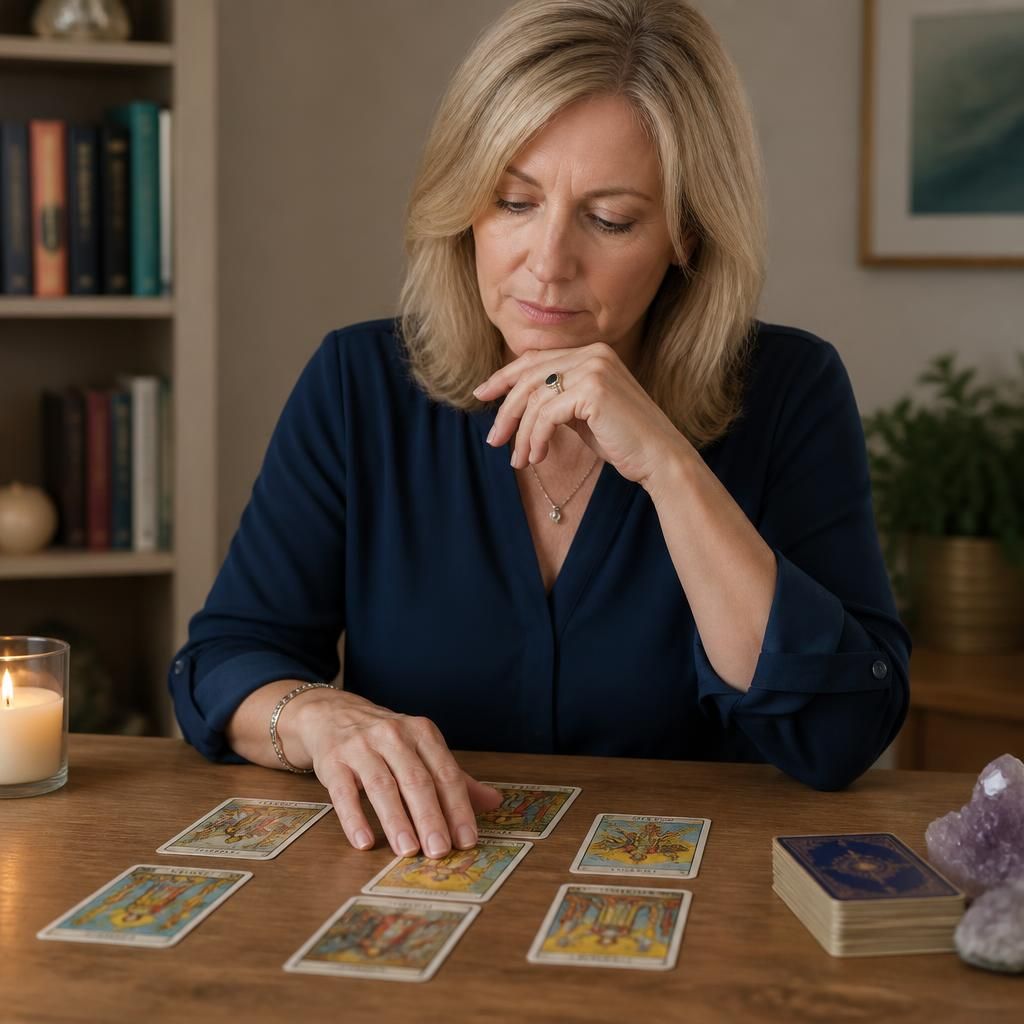
The reader selects or asks you to select cards, then interprets their imagery, position and relationship to the other cards in the spread. The spread may be designed around a particular question or used to examine a wider theme. Card meanings are not applied mechanically: the same card can have a different significance depending on the question, surrounding cards and discussion.
You may be asked for your response as the reading develops. This is not a test of whether you recognise a card; it helps distinguish which parts of the interpretation are relevant to your circumstances. You can request clarification, ask how a conclusion was reached, or move the discussion back to the question if it becomes too broad.
During a psychic reading
A psychic reading generally centres on impressions communicated by the reader rather than a card spread. The reader may describe perceived themes, emotions, circumstances or possible influences and then discuss how these relate to your question. Some readings may include mediumship, in which the focus is on a perceived connection with someone who has died. The process can therefore vary more between practitioners than a tarot reading, so it is sensible to establish the intended approach at the beginning.
Good practice includes treating statements as interpretations rather than unquestionable facts. You should be able to ask for an explanation, correct a misunderstanding and decline to pursue a subject. No reading can remove uncertainty from a complex situation, and an interpretation should not pressure you into an immediate decision.
What the outcome may include
The useful result of a reading is often a clearer way to examine a situation. You may gain possible explanations for a recurring relationship dynamic, identify questions to consider in a career choice, or recognise personal habits that deserve attention. A reading may also present more than one possible direction rather than a single predicted event.
- Relationships: possible communication patterns, emotional influences or areas requiring clearer boundaries.
- Career: factors affecting a decision, overlooked options or concerns about motivation and direction.
- Personal growth: recurring beliefs, priorities or behaviours that may be worth examining.
These are potential areas of reflection, not promised outcomes. Circumstances can change, other people make their own choices, and your actions remain important. The reading cannot establish certainty about future events or replace qualified medical, legal or financial advice where those forms of expertise are required.
After the reading
It can help to note the main themes, questions raised and any practical actions that are within your control. Consider which points are specific and useful, which are open to several interpretations, and which do not fit your circumstances. You are not obliged to accept every statement. If you return to the reading later, compare it with what you actually know and decide rather than treating it as a fixed instruction.
Elizabeth Rose Psychics provides readings by phone and email, so the process may involve a spoken consultation or a written exchange. The essential features remain the same: define the focus, understand the method being used, ask questions during the interpretation and treat the result as perspective that can support personal reflection.
A tarot or psychic reading cannot independently verify another person’s thoughts, intentions or private circumstances. If a reading presents an interpretation about a partner, colleague or family member, treat it as a prompt for reflection rather than evidence. Compare it with direct communication, observable behaviour and the facts available to you before drawing a conclusion.
This distinction is particularly important when the reading concerns a consequential choice. Use the session to identify questions, possible influences or assumptions that deserve examination, then make decisions using relevant evidence and your own judgement. A useful reading should support clearer thinking without becoming the sole basis for decisions about relationships, work, health or finances.