


How does the integration of psychic intuition enhance the interpretive process in a tarot reading?
Integrating psychic intuition adds contextual impressions to the traditional interpretation of tarot symbols, helping the reader relate the cards to the querent’s circumstances. This can bring greater nuance to themes such as relationships, career decisions and personal development, while keeping the cards as the foundation of the reading.
Psychic intuition enhances tarot interpretation by adding an additional layer of perception to the structured meanings of the cards. Rather than replacing tarot knowledge, it can help the reader identify which meanings are most relevant, notice subtle connections between cards and frame the reading in a way that reflects the querent’s underlying concerns.
A tarot reading normally begins with the imagery, symbolism, number, suit and position of each card. Intuitive perception may then influence how those elements are prioritised. For example, a reader might recognise that a card commonly associated with movement is less relevant to physical travel in one reading and more closely connected with a change in attitude or direction. The card’s established meaning remains the reference point; intuition helps determine how it applies within the particular spread.
This process often involves several forms of observation:
- Immediate impressions: The reader may notice a word, image, colour or emotional quality that stands out before the full interpretation is formed.
- Connections between cards: Intuition can draw attention to repeating suits, contrasting figures, similar symbols or a progression from one card to the next.
- Significance of position: A card’s meaning can change according to whether it represents an influence, obstacle, choice, past event or possible direction.
- Underlying themes: The reader may identify a concern that is not expressed directly but is reflected in the spread’s overall pattern.
Intuition is particularly useful when a card has several plausible interpretations. A traditionally positive card may indicate pressure, overextension or unrealistic expectations if it appears alongside more difficult cards. Conversely, a card often viewed as challenging may point to necessary boundaries, an ending that creates space for change or an opportunity to reassess priorities. The intuitive contribution lies in weighing these possibilities rather than selecting a meaning automatically.
In a skilled reading, interpretation is usually built in stages. The reader first establishes what the spread shows on a technical level, then considers intuitive impressions and finally tests the combined interpretation against the question and the querent’s responses. Questions for clarification can help distinguish a useful insight from an assumption. This makes the process collaborative: the reader offers observations, while the querent decides what is relevant to their own circumstances.
Psychic intuition can also affect the level of emphasis given to a reading. A spread may contain several possible topics, but the reader may sense that one issue requires closer examination. In a relationship reading, this might direct attention towards communication patterns or personal boundaries rather than simply asking whether a relationship will continue. In a career reading, it may highlight uncertainty about values, confidence or decision-making instead of treating the cards as a fixed prediction.
The interpretive process still requires discernment. Intuitive impressions should not be presented as verified facts, medical or financial advice, or an unavoidable forecast. They are best treated as possibilities to consider. A responsible reader distinguishes between what is directly suggested by the cards, what has been inferred intuitively and what remains unknown. This distinction helps preserve the querent’s ability to make informed choices.
Intuition can therefore make a tarot reading more responsive and layered, but it does not guarantee accuracy or determine an outcome. Its value is greatest when combined with knowledge of tarot structure, careful listening, transparent language and respect for the querent’s autonomy. The cards provide the framework, while psychic perception can help explore the meanings that deserve the closest attention.
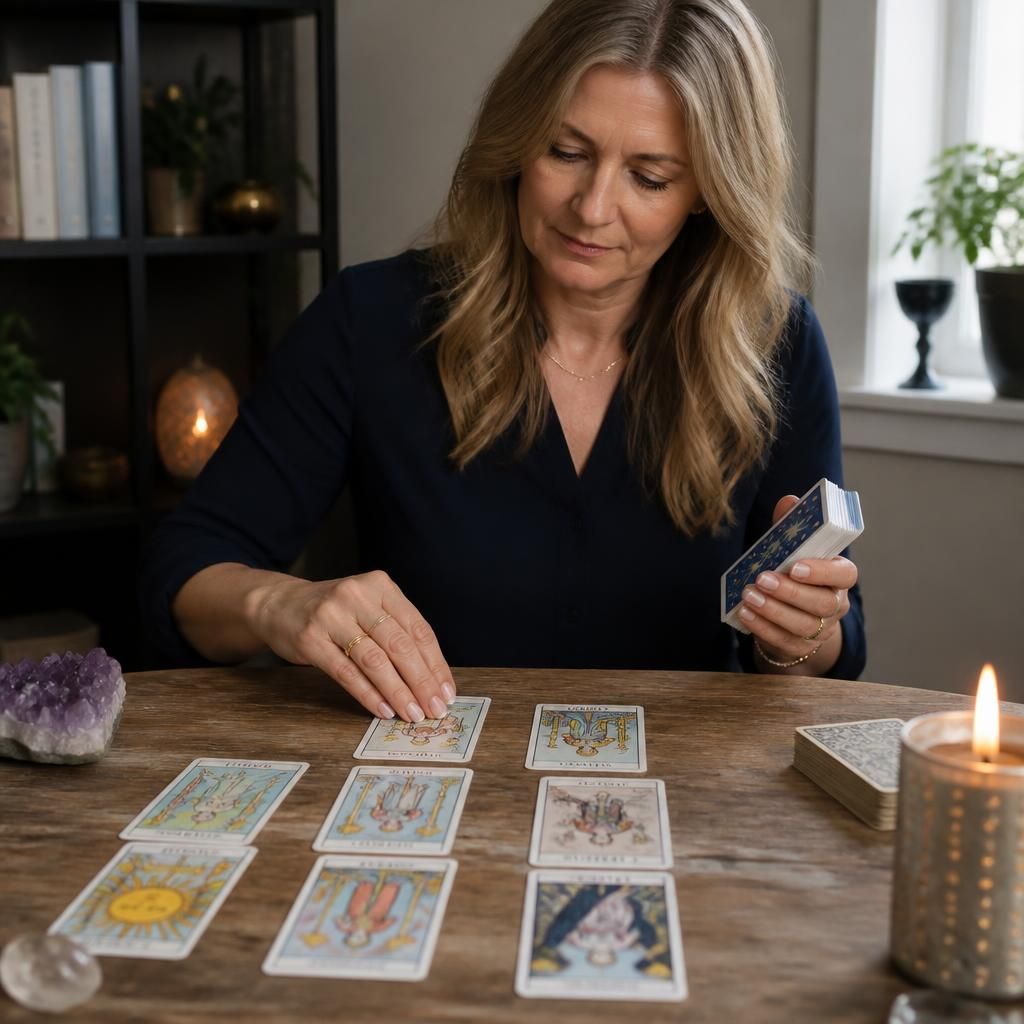
Psychic intuition can help determine where a tarot reading needs greater interpretive depth. After the initial spread is assessed, the reader may sense that one card, position or relationship between cards warrants closer examination. This can guide the choice of a clarifying card or an additional line of enquiry, rather than treating every part of the spread as equally significant.
Used carefully, this creates a more focused reading. The original spread remains the primary reference, while intuitive perception helps decide which aspect to explore further. For example, if a decision-related card appears alongside several conflicting influences, a reader may use a clarification to examine the source of the hesitation rather than adding unrelated information. The resulting interpretation is more specific because the additional material serves a defined purpose.
This approach also requires limits. Clarifying cards should address an identifiable uncertainty, not be drawn repeatedly until a preferred answer appears. Psychic intuition is therefore most useful as a guide to the reading’s structure: it helps select relevant lines of enquiry while the cards provide the evidence for the interpretation.