








How can I assess whether a cartomancy love reading will provide actionable guidance for my specific romantic concerns, and what factors influence the quality of the reading?
A cartomancy love reading is more likely to provide actionable guidance when you ask specific, open questions and supply relevant context about your romantic concerns. Its usefulness also depends on the reader’s skill in interpreting the cards, the clarity of the information provided, the quality of the communication, and your ability to treat the reading as reflective guidance rather than a guaranteed prediction.
Actionable guidance from a cartomancy love reading is guidance that helps you evaluate choices, identify relevant patterns and decide what to do next. It should connect the card interpretation with the circumstances you describe, distinguish possibilities from established facts and leave you with practical options rather than a fixed verdict about your romantic future.
Assess the reading by asking whether it addresses the decision beneath your concern. For example, a useful interpretation may help you consider whether to initiate an honest conversation, establish a boundary, allow more time, or reconsider what you want from the relationship. It should not merely label a person as suitable or unsuitable. The value lies in explaining the factors that may affect a choice and showing where your own judgement remains important.
Look for these qualities in the finished reading:
- Direct relevance: The interpretation remains focused on the relationship issue you submitted instead of drifting into broad statements about your personality or future.
- Practical implications: The reader explains how the symbolism may relate to communication, trust, expectations, commitment, compatibility or personal boundaries.
- Balanced interpretation: Favourable and difficult possibilities are considered, including circumstances that could change the likely direction of events.
- Reasoned uncertainty: The reading identifies what is unclear rather than presenting every interpretation as certain.
- Respect for personal agency: The guidance supports informed choices and does not suggest that the cards remove your responsibility to decide.
- Coherent structure: The individual cards, their positions in the spread and the overall conclusion fit together rather than producing unrelated predictions.
The spread used can influence how useful the result is. A simple spread may be appropriate for examining one choice or the current dynamic, while a broader arrangement may explore contributing influences, obstacles and possible directions. More cards do not automatically create a better reading. An overcrowded spread can introduce conflicting symbols and make the conclusion less precise. The important consideration is whether the layout matches the type of romantic concern being examined.
The wording and limits of the enquiry also affect whether the outcome can be applied. Questions about your own choices are generally easier to turn into practical reflection than demands for certainty about another person’s private thoughts or unavoidable actions. A responsible reading can discuss observable relationship dynamics and possible interpretations, but it cannot independently verify what someone is thinking. Treat claims about another person’s intentions as possibilities to test through respectful communication, not as evidence in themselves.
Timing requires particular caution. Cards may be used to explore stages, momentum or conditions that appear to precede a development, but a date should not be treated as a guaranteed event. Relationship outcomes can change when either person communicates differently, changes their boundaries or makes a new decision. A reading is more useful when it identifies what may affect timing and what you can do during the period under consideration.
You can test the reading’s practical value after receiving it by converting its themes into observable questions:
- What specific behaviour or situation is the interpretation describing?
- Which part is an observation, and which part is a possibility or symbolic inference?
- What choices are available to me?
- What information would I need before acting?
- What would indicate that a proposed course is helping or causing difficulty?
- What alternative explanation should I consider?
If the reading offers no way to distinguish one possibility from another, it may be thought-provoking but not especially actionable. By contrast, guidance becomes more usable when it encourages you to notice real-world signs, consider consequences and choose a proportionate next step. This does not mean forcing every card into a literal event; cartomancy often works through themes, contrasts and questions that help organise reflection.
The reader’s professional approach is another quality factor. Be cautious of interpretations that create fear, insist that only one outcome is possible, encourage dependence on repeated readings or make urgent claims about a partner’s behaviour without a reasonable basis. A sound service should preserve confidentiality, avoid diagnosing mental or physical health conditions and avoid treating a reading as a substitute for legal, medical or therapeutic advice. In relationship matters, it should also avoid encouraging surveillance, manipulation or pressure.
For an email reading, judge quality by whether the written response gives enough explanation for you to understand how the conclusion was reached. It should be possible to identify the subject of the reading, the role of the relevant cards or positions, the main interpretation, its limitations and the practical reflection that follows. Keeping the response allows you to review it later with fresh perspective, but rereading should not turn tentative symbolism into proof. Compare the guidance with what you know, what you observe and what you value before making a significant romantic decision.
Ultimately, a cartomancy love reading is most actionable when it functions as a structured aid to reflection: it clarifies competing possibilities, highlights questions worth addressing and supports deliberate behaviour. Its quality is therefore assessed not by whether it promises a particular romantic outcome, but by whether its reasoning is relevant, measured and useful for making your own informed decision.
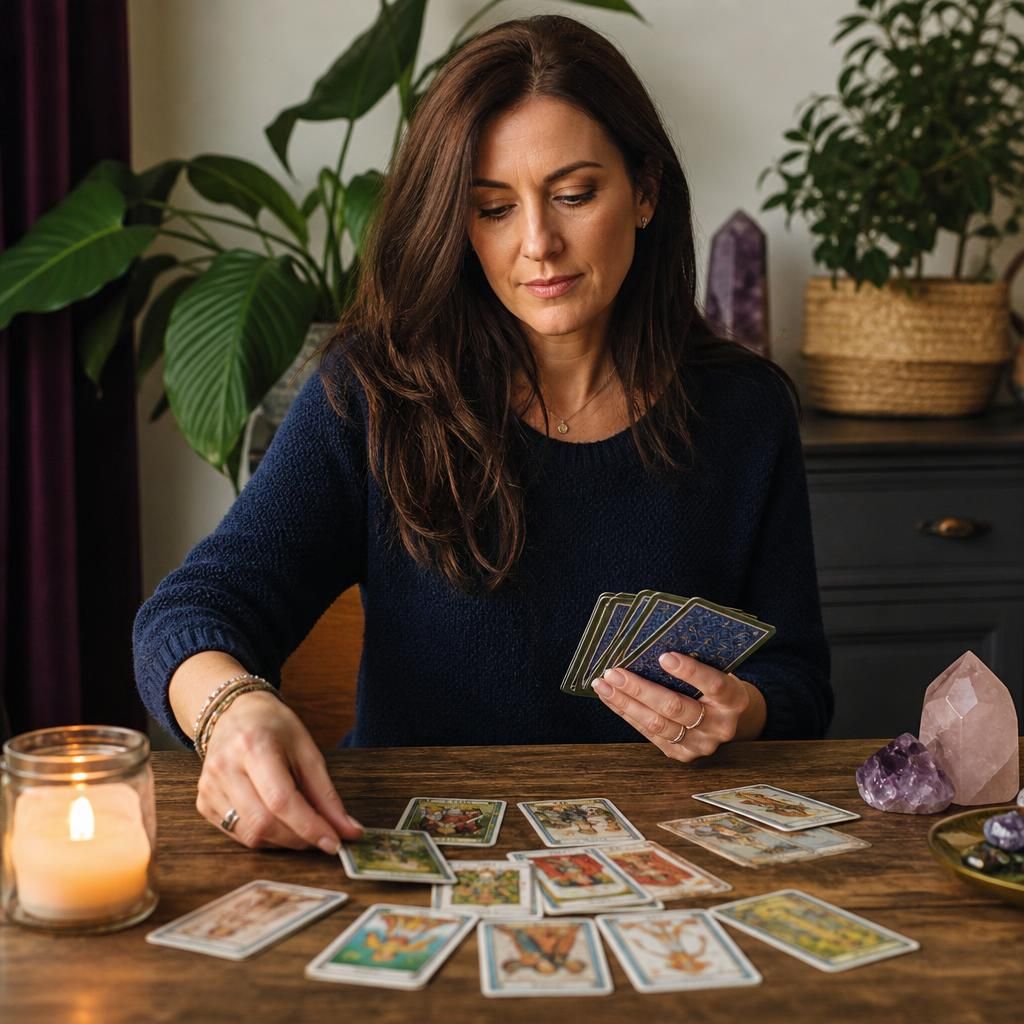
A cartomancy love reading is best assessed by considering whether the concern is suitable for symbolic exploration rather than factual verification. Cards can help examine emotional patterns, relationship dynamics and the factors surrounding a choice, but they cannot establish private information such as whether a partner has been truthful or what they will definitely do next.
Before requesting a reading, separate the concern into three parts:
- What is known: the conversations, actions or circumstances you can directly identify.
- What is uncertain: the interpretation you are considering, such as whether distance reflects stress, hesitation or declining interest.
- What needs deciding: the step within your control, such as asking for clarification, expressing a need or reconsidering an expectation.
This distinction helps you judge whether the interpretation adds perspective without treating symbolism as proof. The strongest fit is usually a question that connects uncertainty with your own choices, because the result can then be assessed against subsequent communication and conduct rather than against an untestable prediction.