


What types of questions can I ask during a cartomancy love reading?
During a cartomancy love reading, you can ask focused questions about another person’s feelings or intentions, the dynamics within a relationship, compatibility, obstacles, and possible romantic developments. Questions about your choices—such as how to approach a situation or what to consider before moving forward—can also help make the reading more relevant to your concerns.
The most useful questions in a cartomancy love reading are open, specific and centred on the part of the situation you want to understand. Rather than asking for a fixed prediction, frame questions that invite the cards to explore influences, patterns, choices and possible directions. This gives the reading enough context to interpret the cards in relation to your circumstances.
Questions about the present situation
- What is the central theme shaping my romantic life at present?
- What am I currently overlooking in this situation?
- Which factors are having the greatest influence on the connection?
- What does the current pattern between us reveal about how the relationship is developing?
- What should I understand about the circumstances surrounding this connection?
These questions are useful when the situation feels unclear or when several influences may be affecting it. They allow the reader to examine the broader context rather than focusing on a single isolated event.
Questions about communication
- What is the most constructive way to communicate my needs?
- How might my words or behaviour be affecting the connection?
- What should I consider before raising a difficult subject?
- What may be preventing clearer communication between us?
- How can I respond thoughtfully rather than react from anxiety or assumption?
Questions of this kind keep the focus on communication that is within your influence. They can be more informative than asking whether another person will say or do something, because they examine the practical steps available to you.
Questions about personal patterns
- What recurring pattern from my past relationships should I examine?
- How might previous experiences be shaping my interpretation of this situation?
- What beliefs about love or commitment could be influencing my decisions?
- Where might I be compromising my own boundaries?
- What personal quality would help me handle this situation with greater clarity?
Cartomancy can be used as a reflective tool, so questions about your own responses may produce useful insight even when another person’s behaviour cannot be known with certainty. They also help distinguish present evidence from fears, hopes or assumptions carried over from earlier relationships.
Questions about boundaries and wellbeing
- What boundary would be appropriate for me to establish or reinforce?
- What signs should I take seriously when assessing whether a relationship is healthy?
- How can I protect my emotional wellbeing while this situation develops?
- What would a balanced response look like if my needs are not being met?
- What should I reflect on before becoming more involved?
These questions are particularly important when the reading concerns inconsistent behaviour, pressure, repeated conflict or uncertainty about whether to continue engaging. A reading should support thoughtful judgement, not replace attention to direct communication, consent, safety or observable conduct.
Questions about a decision
- What factors should I weigh before making this romantic decision?
- What are the possible advantages and difficulties of pursuing this course of action?
- What might I learn by taking a slower, more measured approach?
- What consequence should I consider before contacting this person?
- Which option is most consistent with my values and long-term needs?
Decision-based questions work best when they name the choice clearly. For example, instead of asking a general question about the future, you might ask what you should consider before accepting a former partner’s proposal to reconnect. This gives the card spread a defined subject without treating the result as an instruction.
Questions about a developing connection
- What should I understand about the next stage of this connection?
- What conditions would support a healthier development?
- What could cause the relationship to change direction?
- What would indicate that the connection is progressing in a constructive way?
- What should I remain open to as circumstances evolve?
Questions about development are generally more useful than demands for an absolute outcome. Cartomancy interpretations describe symbolic themes and possibilities; they do not establish that a particular event must occur. Keeping the wording flexible leaves room for changing circumstances and personal choice.
How to phrase follow-up questions
After receiving an interpretation, use follow-up questions to clarify a card or theme rather than repeatedly asking the same prediction in different words. Suitable examples include: “What does this card suggest I need to recognise?”, “How does this theme relate to my behaviour?”, and “What practical matter should I examine further?” If a card appears to indicate hesitation, ask what may be contributing to that hesitation and how you can respond constructively.
Avoid questions that require the reader to claim certainty about private thoughts, guarantee a specific event or make an important decision on your behalf. Questions such as “What should I understand about the evidence I have?” or “How can I approach this responsibly?” preserve the value of the reading while leaving responsibility for your choices with you. For an email reading, writing several focused questions in advance can also help keep the interpretation organised and ensure that the reading addresses the concerns that matter most to you.
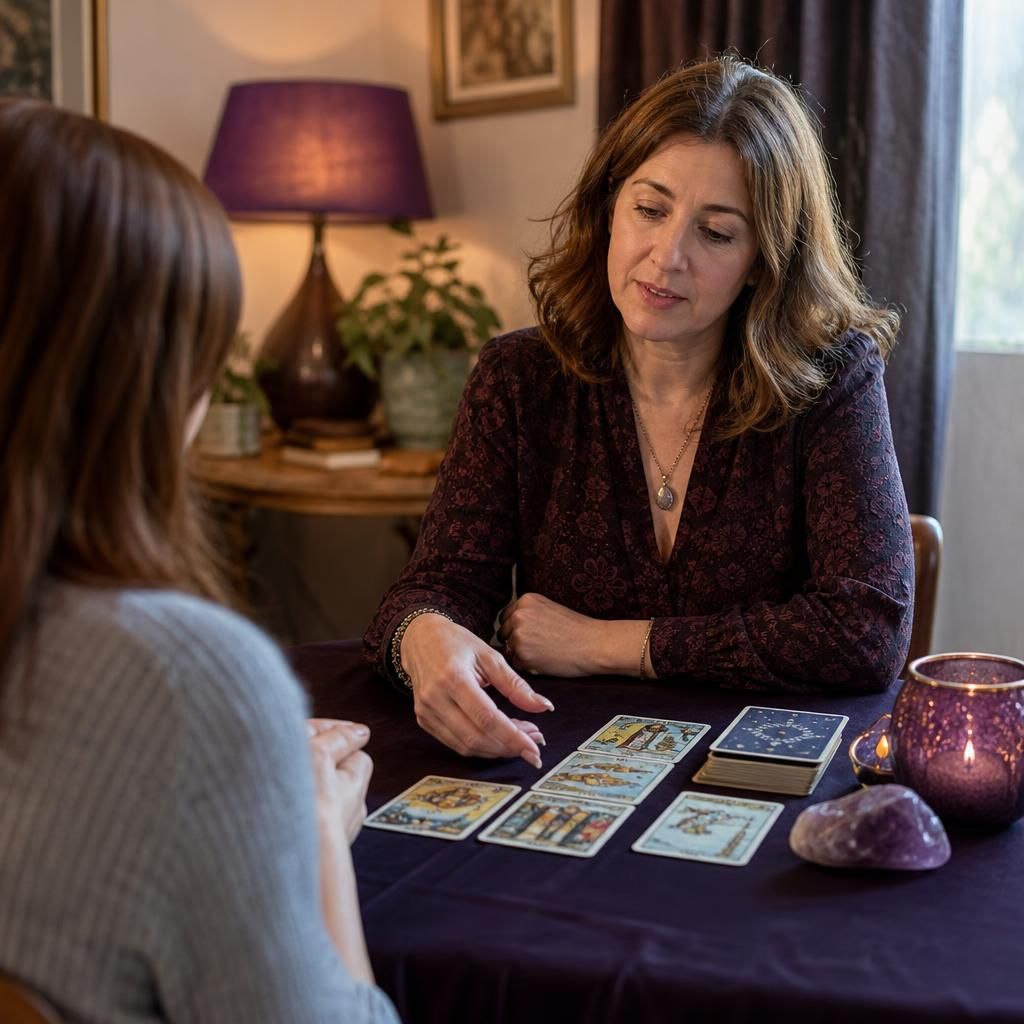
Compatibility questions in a cartomancy love reading can examine how two people’s needs, expectations and relationship styles fit together. Rather than reducing compatibility to a yes-or-no prediction, ask about the practical areas that may support or challenge a lasting connection.
- What differences in communication style should I understand?
- How might our expectations of commitment or independence compare?
- Which shared values could strengthen the relationship?
- Where might our priorities create tension?
- What would we each need to acknowledge for the connection to remain balanced?
This approach produces a more useful discussion of romantic fit because it considers behaviour and expectations, not only attraction. It can also help you identify which differences are manageable through honest discussion and which may conflict with your essential needs.