





How are tarot cards used to understand romantic challenges?
Tarot cards are used to explore romantic challenges by highlighting emotional patterns, communication dynamics and influences that may be affecting a relationship. A carefully chosen spread can offer different perspectives on the situation and help you consider practical next steps, rather than providing a fixed prediction.
Tarot cards help clarify romantic challenges by giving structure to complex questions, separating what is known from what is assumed and examining the influences, choices and likely consequences surrounding a relationship. They are best used as a reflective tool rather than a fixed method of predicting another person’s actions or guaranteeing a particular outcome.
The cards provide a framework for investigation. In a love reading, each card is interpreted according to its traditional symbolism, its position in the spread and its relationship to the other cards. A card may represent an attitude, a concern, an opportunity, an obstacle or an unresolved issue. Its meaning therefore depends on the question and context, rather than being universally positive or negative.
For example, a spread may examine the present position, the main source of difficulty, an influence from the past, a factor that has not been fully recognised and a constructive next step. This structure can make a vague concern more specific. Instead of asking whether a relationship will succeed, a reader might explore what is supporting the connection, what is placing pressure on it and what the querent can reasonably address.
Different cards can illuminate different kinds of romantic difficulty:
- Major Arcana cards often point to significant lessons, turning points or wider personal themes affecting the relationship.
- Minor Arcana cards can provide more detail about day-to-day experiences, decisions and practical circumstances.
- Court cards may describe personalities, behavioural styles or roles that people are taking within the situation. They should not automatically be treated as a literal identification of a specific person.
- Suit symbolism can indicate the area requiring attention. Cups are commonly associated with feelings and attachment, Swords with thoughts and difficult decisions, Wands with desire and initiative, and Pentacles with stability, responsibilities and material concerns.
Tarot can be particularly useful when the challenge involves uncertainty. Cards may help distinguish between a lack of information, fear based on previous experiences and evidence that a boundary or decision needs attention. They can also encourage the reader to consider factors that are easy to overlook, such as differing expectations, unequal effort, conflicting priorities or the effect of outside pressures.
The wording of the question affects the usefulness of the reading. Open questions usually produce more practical insight than questions seeking a simple yes or no. Questions such as “What should I understand about the current difficulty?” or “What action would support a healthier relationship?” leave room to examine choices and responsibilities. Questions focused on controlling another person, proving infidelity or obtaining certainty about an unknowable future are less suitable because the cards cannot replace direct evidence, consent or honest conversation.
When a reading concerns another person’s feelings, interpretation should remain cautious. Tarot may help explore how the relationship appears to the querent and what possibilities they are considering, but it cannot verify someone else’s private thoughts. A responsible reading avoids presenting speculation as fact and brings the focus back to observable behaviour, personal boundaries and decisions within the querent’s control.
Reversed cards, if included in the reader’s method, may add another layer of interpretation. They can suggest blocked expression, delayed development, an inwardly experienced issue or an imbalance in the upright meaning. They do not automatically indicate failure or a negative outcome. Some readers do not use reversals and instead identify nuance through the spread as a whole.
A useful interpretation compares several cards rather than isolating one dramatic image. Repeated suits, complementary symbols and tensions between positions can show which themes deserve closer examination. The reader may then translate those themes into practical reflection: what needs to be discussed, which assumption should be tested, what boundary may be required and what choice is realistically available.
Tarot does not diagnose mental or physical health conditions, establish legal facts or replace professional advice. In matters involving abuse, coercion, serious health concerns or immediate danger, qualified support and appropriate safeguarding should take priority. Within those limits, a tarot reading can offer a disciplined way to reflect on romantic challenges, identify possible areas of action and approach a relationship decision with greater clarity.
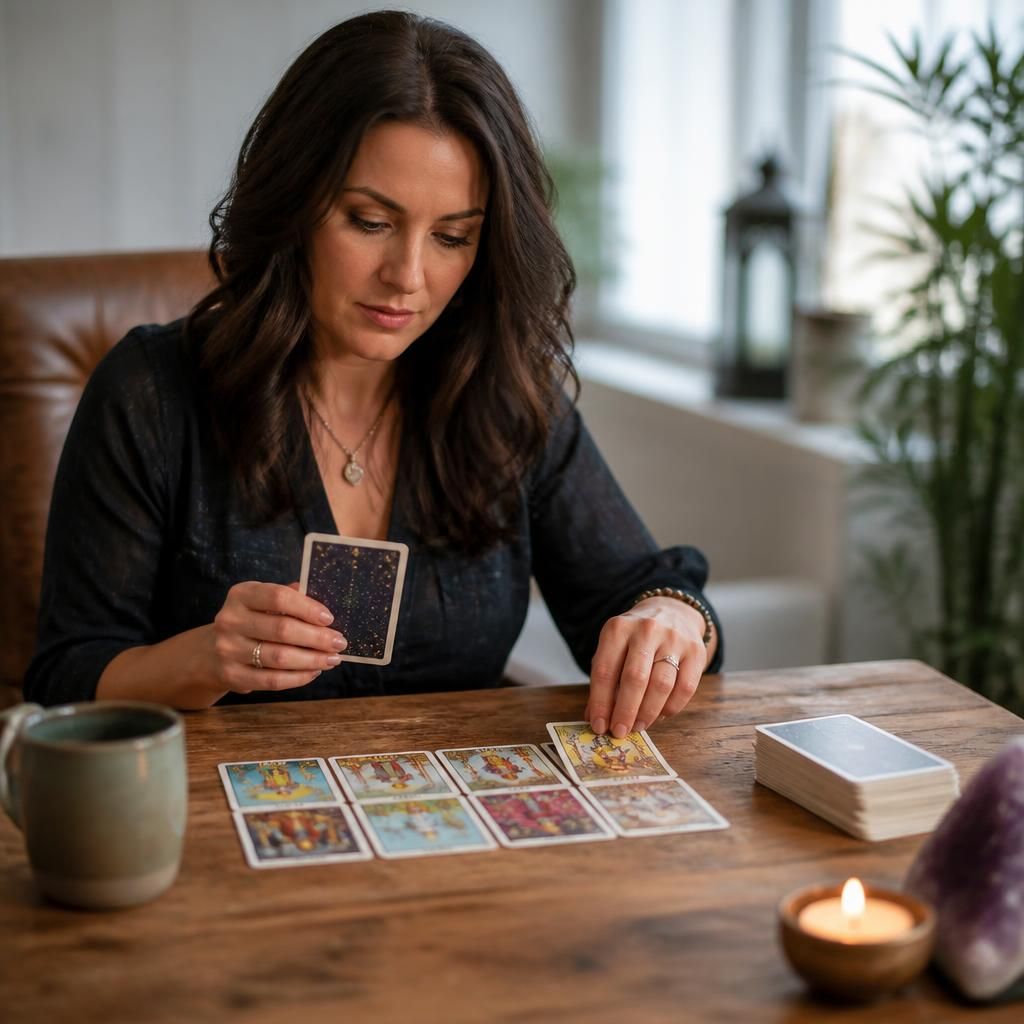
A tarot reading is most useful when treated as a time-bound snapshot rather than a permanent verdict. Record the question, the spread positions and the initial interpretation, then return to the notes after a meaningful conversation or decision. This allows you to compare the themes identified in the reading with what actually changed in the relationship.
Reviewing the reading in this way can reveal whether a concern was temporary, part of a recurring pattern or influenced by assumptions at the time. It also reduces the temptation to seek repeated readings about the same uncertainty before taking reasonable practical steps.