






What are the different types of psychic readings available?
The main types of psychic reading include clairvoyant readings, mediumship, tarot, and astrology, with each using a different approach to provide insight. Your choice may depend on whether you want guidance about relationships, career, personal growth, spiritual connections, or a broader view of your circumstances.
Psychic readings are commonly distinguished by the method used to interpret information and the kind of question being explored. The main categories are clairvoyant readings, mediumship, tarot readings and astrology readings; some practitioners combine more than one approach to provide a broader interpretation.
Clairvoyant readings involve receiving impressions, images, symbols or other intuitive information without relying on a physical divination tool. A clairvoyant may describe themes connected with a person, situation or possible direction. This format can suit someone who wants an open reading rather than an interpretation based on a specific spread, chart or object.
Mediumship readings focus on perceived communication with people who have died. The medium may share identifying details, memories, characteristics or symbolic impressions that are intended to help the client reflect on a continuing spiritual connection. Mediumship is different from a general psychic reading because its central purpose is communication with the deceased, rather than insight into present circumstances alone.
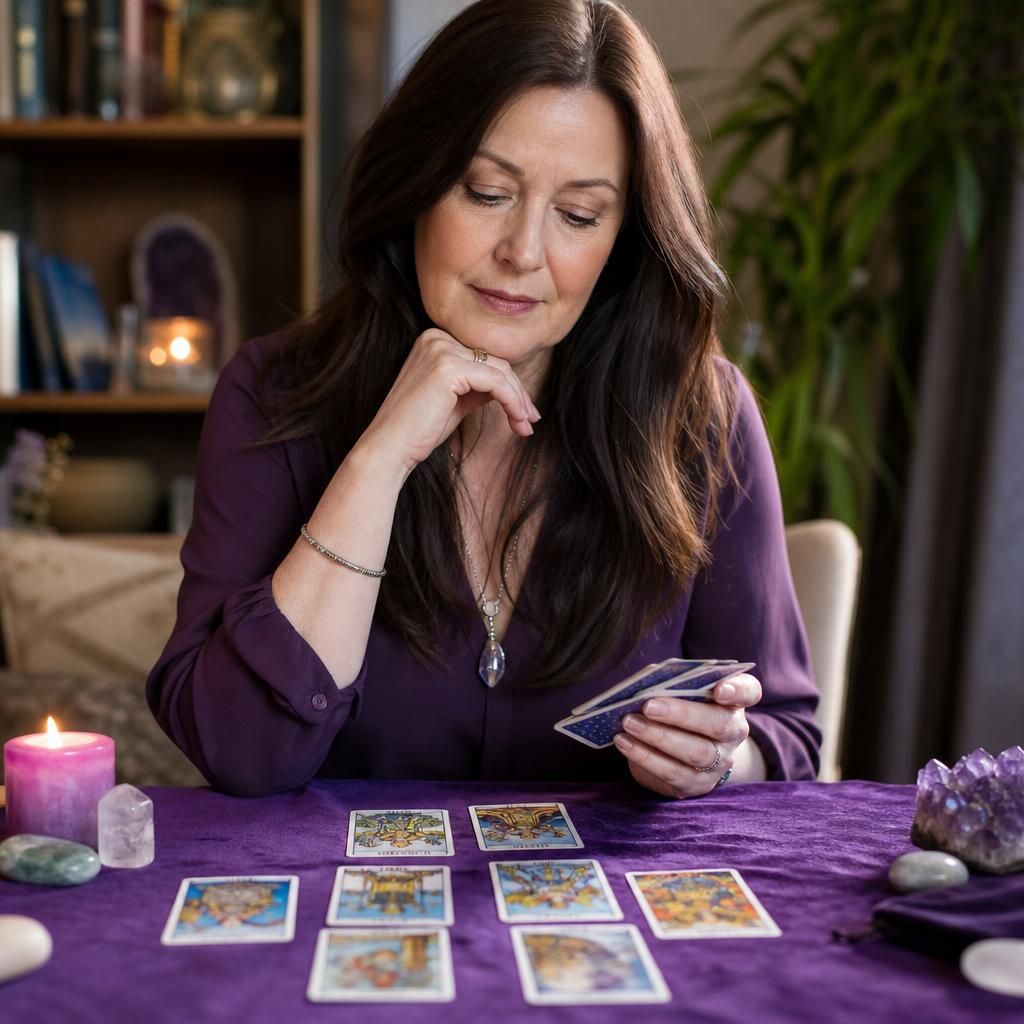
Tarot readings use a deck of cards containing established imagery and symbolic themes. The reader selects and interprets cards in a particular arrangement, known as a spread. Each position in a spread may represent an aspect of the situation, such as the current circumstances, an influence, a challenge or a possible development. Tarot is therefore a structured method: the cards provide prompts for examining patterns, choices and perspectives rather than functioning as a fixed timetable.
Astrology readings interpret relationships between planets, signs and houses in an astrological chart. A birth chart uses the date, time and place of birth to map the sky at the time of birth, while other techniques examine current or future planetary movements. Depending on the reading, astrology may be used to consider personality tendencies, relationship dynamics, recurring themes or periods that invite particular types of attention.
Love and relationship readings are a subject-based category rather than a separate psychic method. They may use clairvoyance, tarot or astrology to examine communication, compatibility, emotional patterns and the choices available to the people involved. A responsible reading should not be treated as proof of another person’s private thoughts or as a substitute for direct communication and personal judgement.
Career and life guidance readings similarly describe the focus of a consultation, not necessarily the technique used. A reader may use cards, intuitive impressions or an astrological chart to explore priorities, obstacles, alternatives and personal strengths. The useful distinction is between receiving perspectives on a decision and handing responsibility for that decision to someone else.
Combined readings draw on two or more methods. For example, a reader might use tarot to give a situation a clear structure, then use clairvoyant impressions to add intuitive context, or use astrology to examine longer-term patterns. Combining methods can add different perspectives, but it can also make the reading harder to assess if the approaches produce conflicting interpretations. It is reasonable to ask which method will lead the session and how the different sources of information will be separated.
The format of delivery is another distinction, but it is not a separate type of psychic practice. A phone reading relies on spoken interaction and allows questions to be explored as the consultation develops. An email reading provides a written interpretation that can be reviewed afterwards and may suit someone who prefers to set out their circumstances carefully. In either format, the underlying category remains clairvoyance, mediumship, tarot, astrology or a combination of these.
To choose an appropriate reading, begin with the kind of insight you want rather than selecting a method solely because it is familiar:
- Choose clairvoyance if you want an open-ended intuitive reading without cards or a chart as the main framework.
- Choose mediumship if your primary interest is a spiritual connection with someone who has died.
- Choose tarot if you prefer a visual, symbolic and question-led approach to examining a situation.
- Choose astrology if you want to explore patterns through birth information and planetary cycles.
- Consider a combined reading if more than one interpretive approach is relevant and you are comfortable with a broader consultation.
Before arranging a reading, prepare one or two clear questions and decide what information you are willing to share. Ask whether the practitioner works with a particular method, whether the reading is intended for general guidance or a focused topic, and how personal information is handled. The best fit depends on your preferred style of interpretation, the subject you want to explore and how much structure you want the session to have.
Psychic readings offer an interpretive perspective rather than independently verifiable certainty. They should not replace medical, legal or financial advice, and important decisions remain the reader’s responsibility. Treating the reading as a tool for reflection helps maintain a practical distinction between spiritual guidance and evidence-based professional support.
When comparing types of psychic readings, distinguish the named method from broad labels such as “intuitive” or “spiritual”. Those terms may describe the practitioner’s style without identifying whether the consultation is based primarily on clairvoyance, mediumship, tarot or astrology.
A reading description should make three points clear:
- Primary method: which practice provides the main interpretation.
- Subject: whether the consultation is general or centred on relationships, career, personal growth or another concern.
- Structure: whether the discussion follows a defined system, such as a card spread or birth chart, or develops more openly through the conversation.
This distinction makes descriptions easier to compare and helps prevent choosing a reading solely because its title sounds appealing. If a listing uses several terms without explaining their roles, ask which method leads the consultation and what the interpretation will cover before arranging it.