







How can I trust the accuracy of a clairvoyant reading?
A clairvoyant reading cannot be verified like a scientific prediction, so its accuracy is best judged by the clarity, relevance and consistency of the insights rather than by guaranteed outcomes. A trustworthy reading presents impressions as guidance, acknowledges uncertainty and leaves you free to assess how they relate to your circumstances.
The accuracy of a clairvoyant reading is best understood as the usefulness and personal fit of the impressions offered, rather than as a scientifically measurable success rate. Clairvoyance involves a practitioner interpreting intuitive impressions about a person, situation or possible direction; those impressions may provide perspective, but they cannot establish future events as fixed facts.
Examine how the reading is conducted. A responsible clairvoyant should explain the nature and limits of the session before interpreting what they perceive. They should distinguish between an impression, an interpretation and a definite piece of information. Language such as “this may suggest” or “you could be approaching” is more appropriate than presenting every possibility as certain. A practitioner who acknowledges ambiguity is demonstrating a more reliable professional approach than one who claims complete knowledge of your future.
The reading should also be individualised without depending heavily on information you have supplied. Broad statements can appear applicable to many people, while meaningful detail should be connected carefully to the circumstances you choose to discuss. Pay attention to whether the practitioner asks open, neutral questions or repeatedly leads you towards a particular answer. Excessive prompting, dramatic claims and pressure to disclose more personal information can make a session feel persuasive without making its insights more dependable.
Separate evidence from interpretation. During a reading, note which comments are specific observations and which are conclusions drawn from them. For example, an impression of change could relate to work, a relationship, living arrangements or an internal decision. Treating one interpretation as the only possible meaning can create a false sense of certainty. A careful reader should allow you to consider alternative explanations and should not insist that an uncertain impression must come true.
Timing is another important limitation. Clairvoyant readings may describe themes, tendencies or possible developments, but personal choices and external events can alter what happens next. A prediction that does not occur exactly as described does not necessarily show that every part of the session was meaningless; equally, a statement that later seems to match an event is not proof that the reading caused or guaranteed it. Review the whole consultation rather than selecting only the most striking coincidence.
Use practical checks after the session.
- Write down the main impressions and their context before events influence your memory.
- Record what was clearly stated, what was uncertain and what you inferred yourself.
- Revisit the notes later and consider whether the information was genuinely specific or broadly applicable.
- Assess whether the reading helped you think more clearly without encouraging fear or dependence.
- Compare the guidance with your own knowledge, evidence and judgement before making a significant decision.
It is also sensible to consider the practitioner’s conduct. Trust is strengthened when a clairvoyant respects boundaries, avoids alarming claims, does not encourage repeated sessions as the only way to solve a problem and makes clear that you remain responsible for your decisions. No reading should replace medical, legal or financial advice, particularly where a decision carries serious consequences. Psychic insight may be used as a reflective tool, but it should not be treated as professional evidence in those fields.
The format of a consultation does not itself prove accuracy. A phone reading and an email reading can both provide a structured opportunity for interpretation, although an email reading gives you a written record to review and a phone session allows immediate clarification. Elizabeth Rose Psychics provides clairvoyant readings by phone and email for individuals throughout the USA. Whichever format you choose, ask how impressions are presented, what information is needed beforehand and how uncertainty is handled.
Before booking, prepare a small number of focused areas rather than trying to test every possible prediction. Avoid supplying unnecessary details if you want to assess whether the practitioner develops impressions independently, but provide enough context for the discussion to remain relevant. Afterward, judge the session by the quality of the process: was it specific without being forced, balanced rather than alarming, respectful of your autonomy and useful in helping you consider your options? Those standards offer a more grounded basis for trust than a promise of perfect prediction.
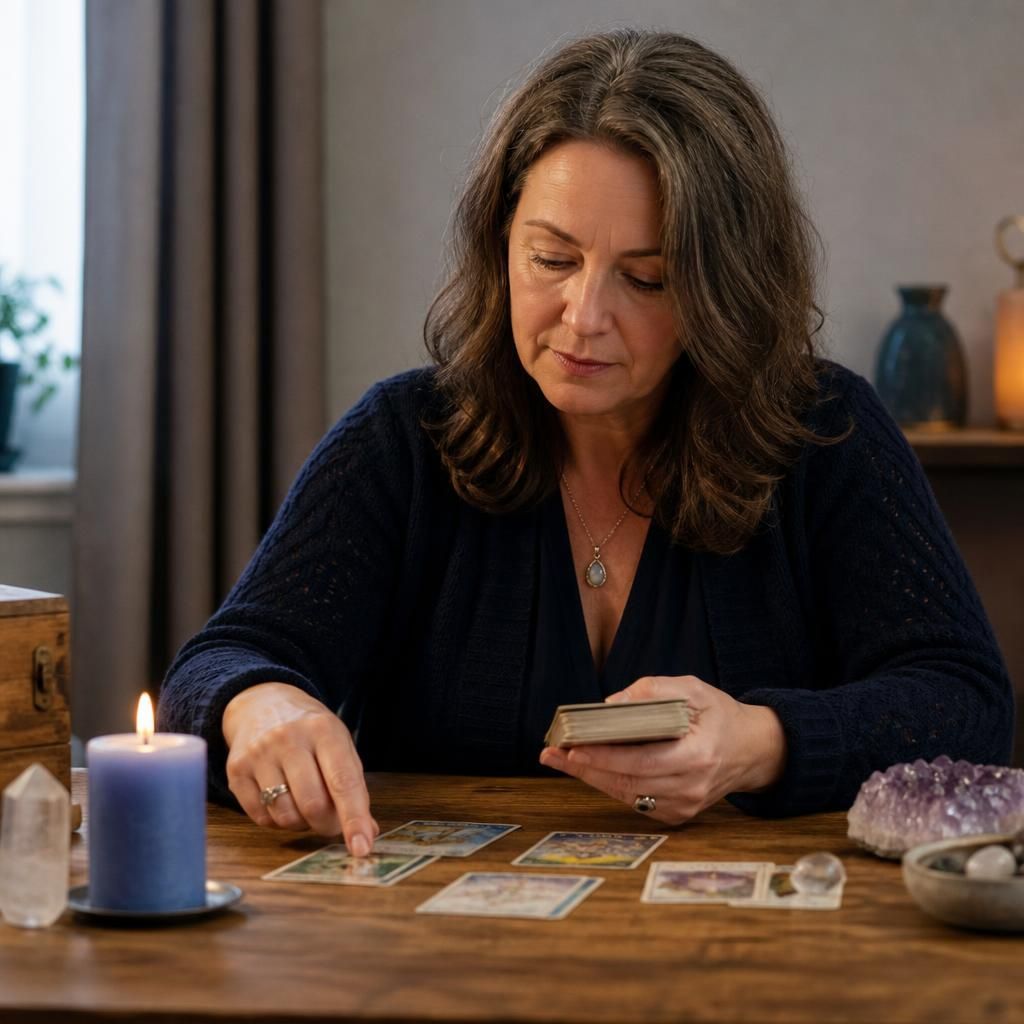
A vivid match is not, by itself, proof that a clairvoyant reading was accurate. People naturally notice details that fit and overlook statements that do not, while general comments can acquire a more specific meaning after an event occurs. To reduce this effect, assess the reading against what was actually said at the time, rather than against a later interpretation.
Look for information that was clear enough to evaluate independently, while recognising that intuitive impressions may remain open to more than one meaning. A balanced assessment considers accurate, inaccurate and unresolved points together. This approach helps distinguish a genuinely relevant insight from confirmation bias or hindsight, without demanding the impossible standard of guaranteed prediction.
Explore a Clairvoyant Reading with Elizabeth Rose Psychics
If you would like to explore your questions through a clairvoyant reading, consider arranging a personalised consultation with Elizabeth Rose Psychics. Bring a focused topic and use the session as a reflective aid alongside your own judgement.