


How do clairvoyant phone readings differ from traditional in-person sessions?
Clairvoyant phone readings take place remotely, so the reading relies on conversation, the sound of your voice and the clairvoyant’s intuitive perception rather than face-to-face presence. Traditional in-person sessions add visual and physical context, such as body language and a shared setting, while phone readings offer a more private and flexible format for exploring the same types of questions.
Clairvoyant phone readings differ from traditional in-person sessions mainly in how information is exchanged and how the session is experienced, rather than in the subjects that can be discussed. A phone reading is conducted through spoken communication, whereas an in-person session includes the practitioner’s physical presence, the room itself and additional non-verbal interaction.
The reading environment is one of the clearest differences. In person, both people share the same physical space, which may include chairs arranged for conversation, cards or other items used by the clairvoyant, and a defined setting for the appointment. By phone, you choose your own surroundings. This can make the session feel more neutral and allows you to decide how much environmental stimulation is present while you listen and respond.
Non-verbal information is more limited by phone. A clairvoyant cannot see your facial expressions, posture or gestures, and you cannot observe their mannerisms or working process. In an in-person session, these details may affect the rhythm of the conversation. Removing them can make the exchange more focused on spoken questions, answers, pauses and the clairvoyant’s stated impressions. It also means that a phone reading should not be assessed by the practitioner’s visual reactions or physical presentation alone.
Conversation tends to carry more of the structure during a phone session. You may need to explain a question clearly, distinguish between relevant and background information, and say when you would like an impression explored further. The clairvoyant can then respond to what you have asked without relying on visual cues. In person, some clarification may occur through gestures or immediate observation, although clear verbal communication remains important in either format.
The role of tools can also vary. A clairvoyant may work without visible tools, or may use tarot cards, astrological information or another established technique during a phone reading. In an in-person session, you can usually see how those materials are arranged and handled. Over the phone, the practitioner needs to describe any relevant process or result clearly, so it is sensible to ask how a particular tool contributes to the reading if that is important to you.
Privacy is managed differently. An in-person appointment gives you a designated location, but travelling to that location and being seen entering it may not suit everyone. A phone reading can be taken from a place selected by you, provided you can speak privately and use a reliable connection. Before beginning, consider who else may be able to hear the conversation and avoid sharing sensitive details in a setting where you cannot control access.
Personal comfort may influence which format feels appropriate. Some people find direct eye contact and a shared room helpful when discussing personal matters. Others communicate more openly without being observed and prefer to consider guidance in familiar surroundings. Neither preference establishes that one format produces better insight; it indicates which conditions may help you participate thoughtfully in the conversation.
There are also practical differences in how you evaluate the session. For a phone reading, useful points to clarify beforehand include:
- Whether the reading is primarily conversational or includes tarot, astrology or another technique.
- How questions are normally introduced and whether you may take notes.
- How the clairvoyant distinguishes intuitive impressions from information you have supplied.
- Whether you can request clarification when a statement is broad or unclear.
- How personal information and the content of the conversation are handled.
In-person sessions may make some of these processes visible, while a phone session places greater emphasis on explanation and active listening. For either format, treat a reading as reflective spiritual guidance rather than a substitute for qualified medical, legal or financial advice. Claims about relationships, career or health should be considered carefully and not used as the sole basis for significant decisions.
For someone comparing the two options, the most useful test is the type of interaction preferred: choose phone contact if a spoken, location-independent conversation suits you; consider an in-person session if sharing a physical setting and observing the practitioner’s process are important. Elizabeth Rose Psychics provides phone and email psychic readings for people seeking guidance through clairvoyance, mediumship, tarot and astrology, so a prospective client can consider which remote format best matches the kind of consultation they want.
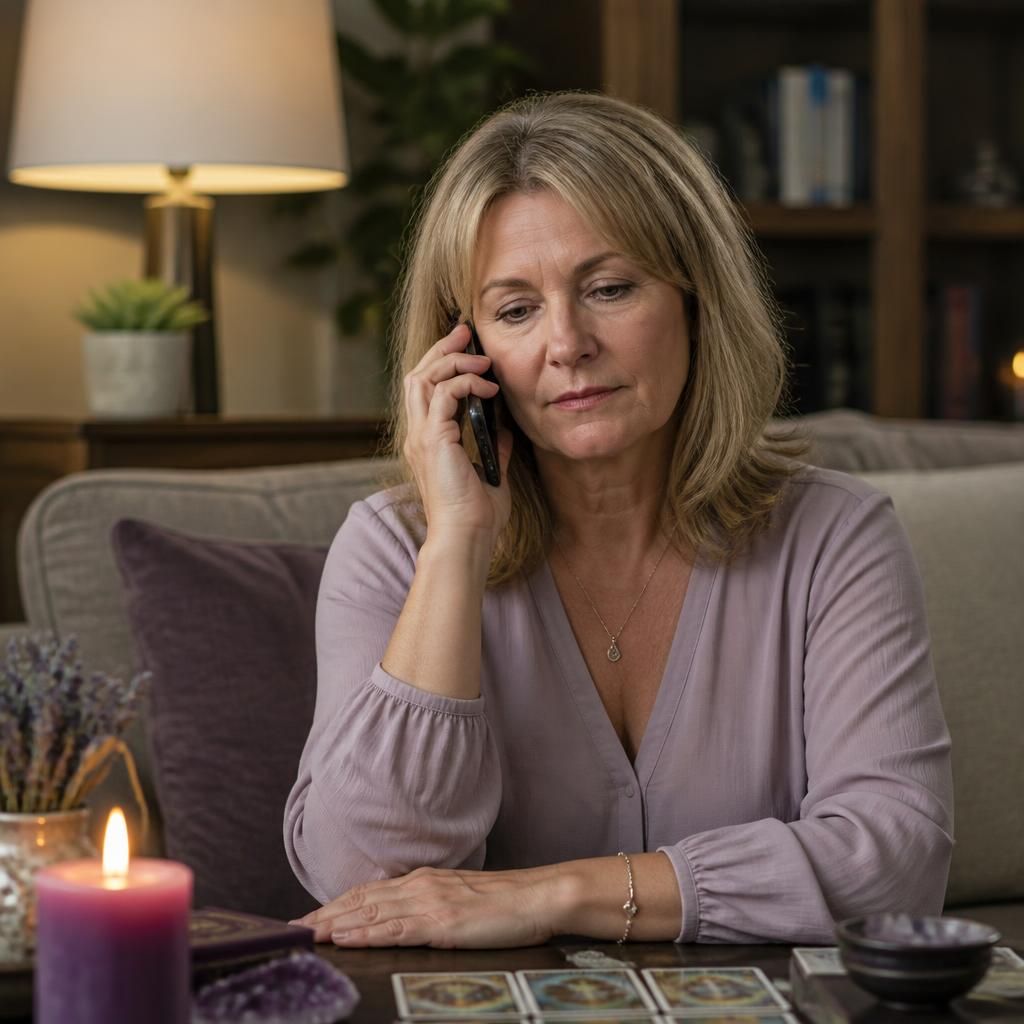
A phone reading can be arranged as a more information-limited consultation, because the clairvoyant cannot draw on your appearance or surroundings. If you want to explore this distinction, explain before the session how much background you intend to provide and whether you prefer to answer questions only when they are asked. This does not prove that impressions are more accurate, but it gives you a clearer basis for considering how the conversation develops.
In-person sessions may naturally include contextual information from the room and from visual interaction. By contrast, a phone session makes the spoken exchange easier to define in advance. Agreeing what information you will share, how questions will be handled and when clarification is appropriate can help you distinguish the clairvoyant’s stated impressions from details introduced during the discussion.