




How do moon phases influence zodiac love readings?
Moon phases are used in zodiac love readings as a symbolic way to interpret changing emotions, relationship patterns and personal intentions. New and full moons are often associated with beginnings, heightened awareness or turning points, while the waxing and waning phases can suggest developing or releasing romantic themes.
Moon phases influence zodiac love readings by providing a symbolic timing framework for emotional awareness, communication and relationship reflection. In astrology, the Moon is associated with feelings, instinctive responses, attachment needs and the way people seek security. Its changing phase is therefore considered alongside the zodiac signs, houses and planetary aspects to add context to a romantic interpretation rather than to determine a fixed outcome.
Astrologers generally consider the lunar cycle in relation to the birth charts of the people involved. A phase occurring in a sensitive area of one person’s chart may be interpreted differently from the same phase in another person’s chart. For example, a lunation affecting the fifth house may draw attention to dating, attraction and enjoyment, whereas activity connected with the seventh house may place greater emphasis on partnership, commitment or negotiation. The relevant zodiac sign can further describe the style in which those themes may be expressed.
- New Moon: This phase is often read as a quieter point for identifying intentions and considering what someone wants from their romantic life. In a love reading, the sign and house involved may indicate the type of relationship focus being formed internally.
- Waxing Crescent: This stage can be interpreted as a period in which an intention requires attention and practical development. A reading may examine whether communication, trust or shared plans are receiving consistent effort.
- First Quarter: The increased lunar light is sometimes linked symbolically with decisions and constructive tension. In relationship work, it may highlight the need to address a difference, choose a direction or turn an idea into an observable action.
- Waxing Gibbous: This phase is commonly used for reviewing progress before a matter reaches greater visibility. A reader may consider whether expectations match behaviour and whether adjustments could improve a developing connection.
- Full Moon: The full Moon is often associated with culmination and visibility. In a zodiac love reading, it may draw attention to feelings or relationship dynamics that are harder to overlook, although it does not by itself prove that a particular event will occur.
- Waning Gibbous: This stage can support interpretation centred on assessment and understanding. It may be used to explore what a relationship has revealed, which conversations have been useful and what lessons should inform future choices.
- Last Quarter: Astrological interpretations may connect this phase with reassessment and resolution. In romantic matters, that can mean reviewing boundaries, changing an unhelpful response pattern or deciding which expectations are no longer realistic.
- Waning Crescent: This is often treated as a reflective interval before the next cycle. A reading may focus on rest, emotional processing and distinguishing genuine relationship needs from temporary reactions.
The phase alone is not enough to produce a detailed reading. Its zodiac sign describes qualities such as directness, caution, sentimentality or independence, while the house indicates the life area receiving attention. Aspects from planets can modify the interpretation: Venus may bring themes of affection and values, Mars may emphasise desire or conflict, and Saturn may raise questions about responsibility or limits. These symbols need to be considered together rather than interpreted as isolated predictions.
Moon phases can also be used to compare personal timing with relationship dynamics. If the same phase activates important points in both birth charts, an astrologer may explore shared themes, contrasting emotional needs or differing responses to change. This does not establish compatibility on its own. It offers a way to formulate questions about how each person communicates, seeks reassurance and manages uncertainty.
For daily zodiac love readings, the Moon’s rapid movement makes it useful for short-term emotional context. A sign change may be interpreted as a shift in mood or conversational emphasis, while the phase supplies a broader sense of where a process sits within the lunar cycle. Daily interpretations are best treated as prompts for self-observation, not as conclusive forecasts about another person’s thoughts or actions.
A careful reading should distinguish symbolic guidance from evidence. The Moon’s astronomical phase can be calculated, but claims about its effect on romantic events belong to astrological interpretation rather than established scientific prediction. Practical decisions should therefore include direct communication, observed behaviour, personal boundaries and relevant real-world circumstances. A useful reading can help organise reflection, but it cannot replace consent, honest discussion or professional support where serious relationship or health concerns are involved.
When reviewing a moon-phase love reading, consider three questions: which emotional or relationship theme is being highlighted, what chart factors support that interpretation, and what practical response would be proportionate? Keeping notes across several lunar phases can reveal recurring concerns and distinguish a temporary mood from a persistent pattern. For a more individual interpretation, a phone or email consultation with Elizabeth Rose Psychics can combine lunar symbolism with approaches such as clairvoyance, mediumship, tarot or astrology, depending on the type of guidance being sought.
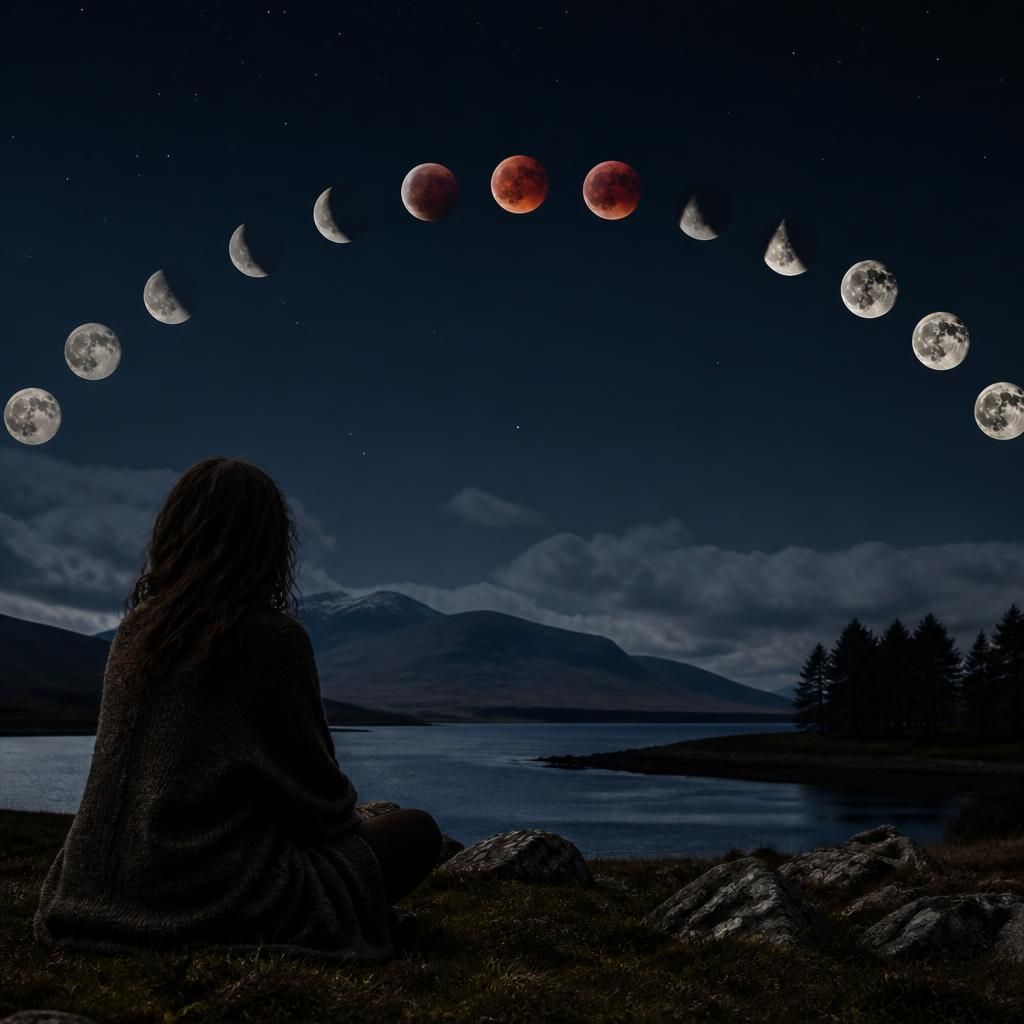
Eclipses are special cases in moon-phase astrology. A solar eclipse occurs at a new Moon and a lunar eclipse at a full Moon, when the Sun, Earth and Moon align closely enough for one body to cast a shadow. In zodiac love readings, astrologers may give these lunations additional interpretive weight because they are treated as periods when existing relationship themes become more noticeable or require closer examination.
This symbolism does not mean an eclipse guarantees a new relationship, separation or other romantic event. Its relevance is assessed through the zodiac sign, chart position and related aspects, then compared with observable circumstances such as communication and behaviour. The most useful interpretation treats an eclipse as a prompt to review a relationship theme rather than as a fixed prediction.