






What differentiates clairvoyant insights from other types of intuitive abilities?
Clairvoyant insights are traditionally understood as visual impressions, such as mental images, symbols or scenes, perceived intuitively rather than through ordinary sight. This differs from mediumship, which focuses on impressions associated with spirits or the deceased, while tarot and astrology use structured systems to interpret guidance, and other intuitive abilities may involve hearing, feeling or directly knowing information.
Clairvoyant insight is distinguished primarily by the way information is perceived: it is an impression that appears as an internally experienced image, visual pattern or symbolic representation. Other intuitive abilities may arise as an inner voice, an emotional or bodily sensation, an immediate sense of certainty, or an interpretation produced through a recognised symbolic framework. The difference is therefore not simply whether a reading is psychic, but how the information arrives and how it is interpreted.
Clairvoyance and other intuitive senses
Clairvoyance is often grouped with several intuitive faculties, sometimes described using traditional terms:
- Clairaudience involves words, phrases, sounds or an inner voice rather than visual content.
- Clairsentience is associated with felt impressions, such as a change in mood, a bodily sensation or an emotional response linked to a person or situation.
- Claircognisance refers to information that appears as direct knowing, without a discernible image, sound or physical sensation.
- Clairalience and clairgustance describe impressions connected with smell and taste. These experiences are less commonly reported, but they illustrate that intuitive perception is not limited to visual material.
A clairvoyant impression may therefore contain more specific visual detail than another intuitive response, such as a colour, face, object, location or sequence of events. However, the presence of an image does not automatically make an impression more accurate. Its meaning still depends on context, interpretation and careful checking against the question being explored.
Clairvoyance compared with mediumship
The distinction from mediumship concerns the perceived source and purpose of the information. Clairvoyant work may focus on circumstances, possibilities, character or patterns in a living person’s situation. Mediumship is specifically concerned with communication or impressions connected with spirits or people who have died. A medium may experience visual information, but the visual quality alone does not define the practice; the relationship to the spirit communication does.
In practice, the two approaches can overlap. A medium might receive a visual symbol while carrying out a reading, and a clairvoyant may describe a person or event using visual impressions. To understand the difference, consider what the reader is interpreting rather than relying on the sensory form alone.
Clairvoyance compared with tarot
Tarot reading uses a defined deck of cards, with established imagery, positions and relationships between cards. The reader interprets the spread in relation to the question, often combining knowledge of the card system with personal intuition. Clairvoyant insight does not require cards or a spread. The information is received directly as an impression and then translated into relevant language.
This does not mean tarot is entirely separate from intuitive perception. An experienced tarot reader may notice an intuitive image or feeling while interpreting the cards. Equally, a clairvoyant may use a card as a prompt to organise or clarify an impression. The key difference is whether the primary source of structure is the visual impression itself or the selected cards and their positions.
Clairvoyance compared with astrology
Astrology interprets the positions and relationships of celestial bodies at a particular time, commonly using a birth chart or current planetary movements. Its conclusions are developed through a symbolic system that can be studied, calculated and applied consistently. Clairvoyant insight is not generated from a chart or astronomical calculation, although a reader may use astrological information alongside intuitive impressions.
Astrology can offer a broad framework for recurring tendencies, cycles and timing themes, whereas clairvoyance is generally used to explore the details that arise in relation to a specific person or question. Neither method should be treated as a guarantee of a fixed outcome. Both involve interpretation, and both are best understood as tools for reflection rather than substitutes for professional medical, legal or financial advice.
How the differences affect a reading
The method used influences the type of material a reader may explore:
- A clairvoyant approach may be useful when the question concerns a particular image, pattern, person or developing situation.
- A mediumistic approach is relevant when the purpose is to explore impressions associated with someone who has died.
- Tarot can provide a structured way to examine influences, choices and possible developments through a spread.
- Astrology can place experiences within a wider pattern of chart factors and planetary cycles.
- Clairaudient, clairsentient or claircognisant impressions may add information through words, feelings or immediate understanding rather than pictures.
These categories describe emphasis, not rigid boundaries. A reading can involve more than one faculty, particularly when an image is accompanied by a feeling, phrase or sudden understanding. The most useful distinction is the dominant form of perception and the interpretative system, not a claim that one ability operates in isolation.
Assessing a claimed clairvoyant insight
A visual impression should be handled cautiously. Ask what was actually perceived, which parts are direct impressions and which parts are interpretation, and whether the information relates clearly to the question. Symbols can have personal or cultural meanings, so an image should not be assigned a universal meaning without considering the individual’s circumstances.
It is also helpful to separate observation from prediction. Seeing an image may suggest a theme, memory or possibility, but it does not establish that a particular event will happen. A responsible interpretation acknowledges uncertainty, avoids unnecessarily definite claims and leaves room for the reader’s own judgement.
For someone comparing different forms of psychic guidance, the choice can be based on the kind of question and the preferred format. Elizabeth Rose Psychics provides consultations by phone and email, with services centred on clairvoyance, mediumship, tarot and astrology. Understanding how each method produces and organises information makes it easier to choose a reading that matches the type of insight being sought.
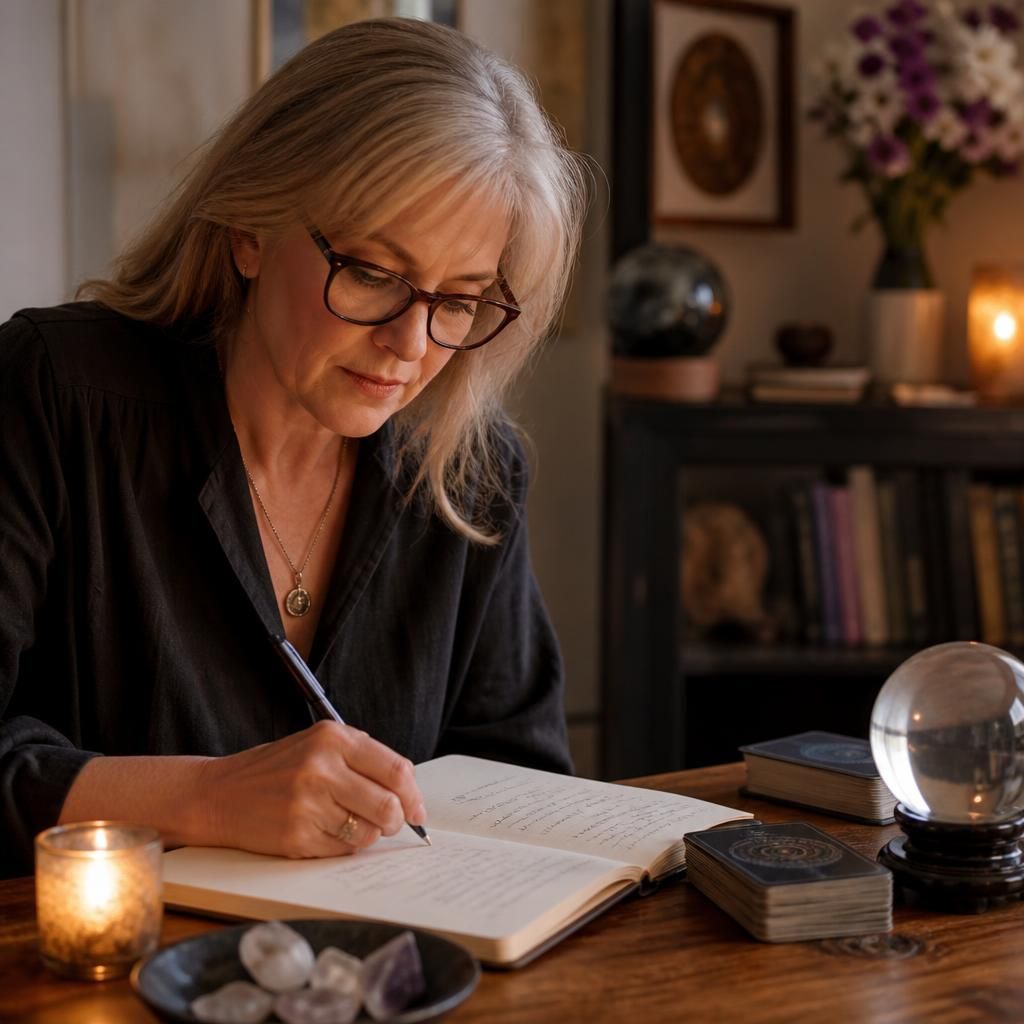
A clairvoyant image should not be treated as distinct from imagination simply because it feels vivid. Memory, expectation and deliberate visualisation can also create convincing mental pictures. The more useful distinction is how the impression arises and how responsibly it is tested, rather than how realistic it seems.
One practical approach is to record the initial image before explaining it. Note its specific details, the question it appeared in response to and any uncertainty surrounding it. Only then consider possible meanings and relevance. This reduces the risk of reshaping a vague image to fit events after they occur. It also keeps the interpretation separate from the original impression, making clairvoyant work easier to compare with methods that rely on cards, charts or spirit-related communication.