







How does Vedic astrology differ from Western astrology?
Vedic astrology, rooted in Indian traditions, generally uses the sidereal zodiac, which accounts for the gradual shift of the constellations, while Western astrology usually uses the tropical zodiac, aligned with the seasons. Vedic astrology also places stronger emphasis on lunar factors, nakshatras and predictive timing systems such as dashas, whereas Western astrology commonly focuses on the Sun, planets and their transits within a tropical birth chart.
Vedic and Western astrology are distinct interpretive systems that can produce different birth-chart placements and conclusions from the same birth details. Their differences extend beyond the zodiac used: they also involve the calculation of planetary positions, house structures, interpretive priorities, predictive methods and the traditions behind the symbolism.
Chart calculation is one of the first practical differences. Vedic astrology normally applies a sidereal framework, adjusted through an ayanamsa to account for the apparent movement of the equinoxes over time. Western astrology generally calculates a tropical chart based on the seasonal cycle. As a result, a planet may appear in a different sign in each system, particularly when it is near a sign boundary. This does not mean one chart is automatically correct and the other incorrect; each uses a different reference point and interpretive model.
The house systems may also vary. Western astrologers use several approaches to dividing the chart into houses, including systems that create unequal house sizes depending on latitude. Vedic astrology commonly gives particular importance to whole-sign houses, in which each zodiac sign represents a complete house from the ascendant. Some Vedic practitioners also use additional divisional charts, known as vargas, to examine particular areas such as marriage, vocation or spiritual development. These extra charts have no direct equivalent in every Western practice.
The two traditions organise meaning differently. Western astrology often examines psychological patterns, identity, emotional responses, relationships and personal development. It may consider how planets interact through aspects, including conjunctions, squares, trines and oppositions. Vedic astrology also interprets planetary relationships, but commonly places substantial weight on a planet’s dignity, functional role for the individual chart, house lordship and condition in the sign it occupies.
Planetary aspects are not identical in both systems. Western astrology usually considers angular relationships between planets, with the exact distance between them influencing the strength and character of an aspect. Vedic astrology uses its own aspect rules, including special aspects associated with certain planets. Therefore, two astrologers may identify different influential relationships even when examining broadly similar planetary patterns.
Vedic astrology has a more developed system of planetary periods. A birth chart may be assessed through dashas, which divide life into periods associated with particular planets. These periods are used to explore when certain themes may become more prominent. Western astrology more commonly uses techniques such as progressions, solar arcs, annual charts and transits to study development and timing. Practitioners within either tradition may use several techniques together rather than relying on one method alone.
The role of remedies is another notable distinction. In Vedic and Hindu astrological practice, an interpretation may be accompanied by traditional measures such as mantra, charitable action, ritual observance or the use of particular devotional practices. These are generally presented as ways of responding to perceived planetary themes within a spiritual framework. Western astrology more often focuses on awareness, reflection and practical choices, although individual practitioners may incorporate symbolic or spiritual exercises.
Terminology can reveal which system is being used. Terms such as lagna, varga, dasha, nakshatra and planetary yogas usually indicate a Vedic approach. Western readings may refer more often to psychological archetypes, natal aspects, progressions, retrogrades and chart patterns. The same planet can also carry a different emphasis: Vedic astrology may assess its house rulership and strength in detail, while Western interpretation may concentrate more on its sign, house, aspects and psychological expression.
The choice between them depends on the type of guidance being sought. Vedic astrology may suit someone interested in traditional Indian techniques, detailed timing systems, divisional charts or spiritual remedies. Western astrology may be preferable for someone seeking a psychologically oriented discussion of identity, relationships, behaviour and personal growth. These are tendencies rather than strict rules, because individual astrologers may combine methods or interpret them in distinctive ways.
For a meaningful comparison, the birth date, exact birth time and birthplace should be entered accurately into the relevant system. A small uncertainty in birth time can affect the ascendant, houses and timing calculations. It is also useful to ask which zodiac framework, house system and predictive techniques a practitioner uses, especially if two readings appear to disagree. Different results often reflect different assumptions at the calculation stage rather than a simple contradiction.
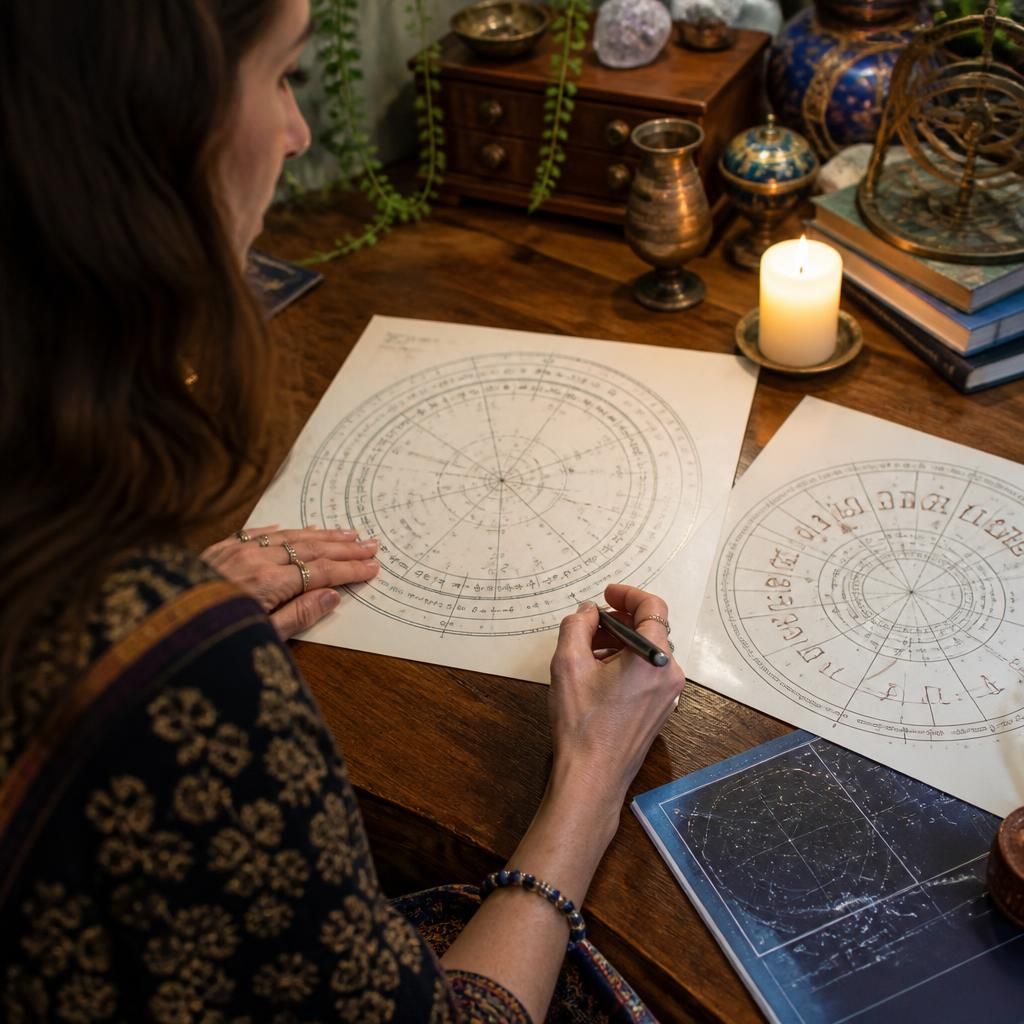
A key difference between Vedic and Western astrology is the tradition in which each system interprets planetary symbolism. Vedic astrology, often called Jyotisha, developed within Indian philosophical and religious culture, where astrology has traditionally been connected with concepts such as dharma, karma and the timing of significant life events. Western astrology developed from Greco-Roman traditions and has, particularly in modern practice, given greater attention to character, behaviour and psychological development.
These backgrounds influence the questions an astrologer may ask and the language used in a reading. A Vedic interpretation may consider how a chart relates to duty, life direction and traditional spiritual practice, while a Western interpretation may frame similar patterns as tendencies, motivations or opportunities for self-understanding. Neither description applies to every practitioner: both traditions contain varied schools, and some astrologers combine techniques. The cultural framework is therefore an important difference alongside the technical distinctions in chart calculation.